Across the UK and Europe, households are stockpiling logs and pellets to face the colder months, hoping to save on energy bills. Yet, in many homes, a small and inexpensive device can dramatically improve how efficiently that fuel burns — and how much actual warmth you get for your money.
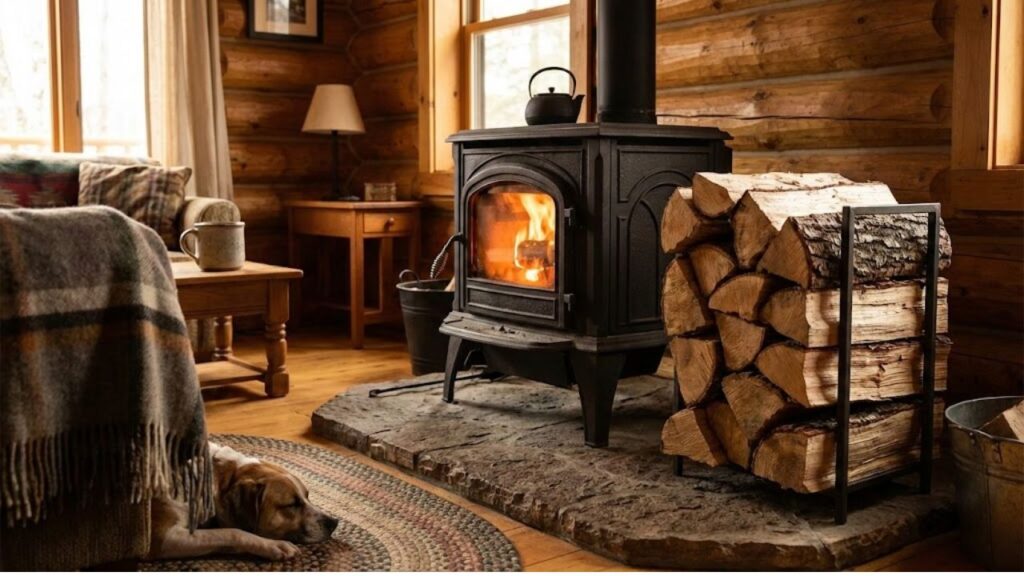
Wood Heating Revival Amid Rising Energy Costs
With gas and electricity prices remaining unpredictable, wood-burning stoves, pellet stoves, and traditional fireplaces are seeing a strong resurgence. Many people use them to keep at least one room comfortably warm without letting monthly bills escalate. However, the cost of firewood and pellets has also increased. Poorly prepared logs or damp pellets release far less heat, forcing you to burn more fuel than anticipated. Often, the weak link isn’t the stove but the condition of the fuel and the storage environment.
Dry wood isn’t just convenient — it determines how much heat you extract from every log you burn.
The Simple Device That Maximizes Your Stove’s Efficiency
The most effective accessory isn’t a high-tech stove fan or a smart thermostat. It’s a basic dehumidifier, placed near your logs or pellets. Even seasoned firewood can absorb moisture from garage floors, cold walls, or unventilated sheds. Pellets are even more sensitive, crumbling or swelling when humidity rises.
By placing a dehumidifier in the storage area, you encourage more even drying and a cleaner, hotter burn. It steadily removes excess moisture from the air, drawing water out of the wood over days or weeks and turning “barely ready” fuel into genuinely efficient heating material.
Recommended Moisture Levels for Firewood
Experts suggest logs used in modern wood-burning stoves should have a moisture content below 20%. Above this, much of the energy goes into turning water into steam instead of warming your room. Signs of damp wood include:
- Logs that hiss or crackle excessively
- Blackened glass doors
- Lazy, orange flames instead of bright, lively flames
Moisture guidelines:
- Below 20%: Efficient burn, more heat, less smoke
- 20–30%: Usable, but more wood needed for same warmth
- Above 30%: Poor performance, higher pollution, faster soot build-up
Selecting Fuel That Actually Saves Money
Before investing in gadgets, the first step is choosing the right type of wood. Hardwoods like oak, ash, beech, and hornbeam provide longer, steadier heat than softwoods such as pine. While more expensive per cubic metre, they burn slower and reduce the frequency of stove refills.
| Type of Wood | Main Advantage | Ideal Use |
|---|---|---|
| Hardwood logs | Long, steady burn, excellent embers | Primary heating, evening fires |
| Softwood logs | Lights quickly, cheaper | Starting the fire, short burns |
| Pellets | Consistent size, automatic feeding | Pellet stoves, daily regular heating |
Regardless of type, logs should be well split, visibly dry with end cracks, and feel lighter than freshly cut wood. Pellets should remain firm, stored in intact bags, and show no signs of condensation.