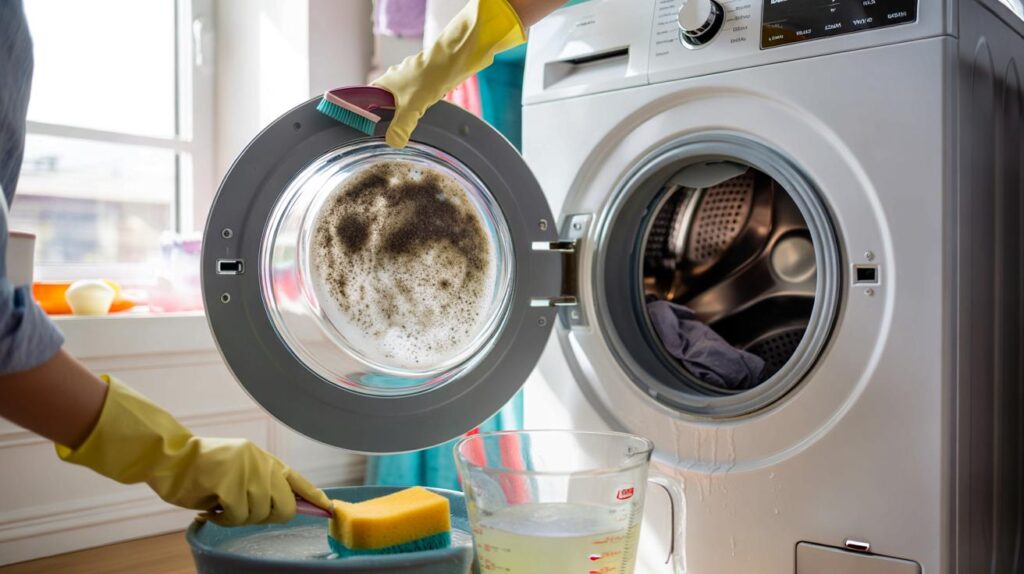
That tiny compartment where you pour detergent can quietly turn into a mould farm. Left alone, it won’t just ruin your laundry’s smell – it can affect air quality, irritate your skin and, in stubborn cases, shorten your machine’s life.
Why mould loves your washing machine drawer
The detergent drawer offers everything mould needs: moisture, residues and darkness. Water splashes in during each cycle, detergent and softener cling to the plastic, and many of us slam the drawer shut as soon as the wash is done.
This isn’t just a cosmetic problem. Mould growth releases particles that can act as allergens or irritants. Some people notice sneezing, a runny nose, red or itchy eyes. Others develop rashes or irritated skin just from handling a mouldy drawer.

In a damp laundry room, spores can contribute to congestion, coughing and a burning sensation in the eyes. That “old sock” smell on clean clothes is often a sign that the drawer and internal parts of the machine are contaminated, not that the detergent is weak.
Mould in the drawer doesn’t stay put – its spores can spread through the water, reach seals, hoses and the air in your laundry area.
Each wash can dislodge spores, moving them into the drum, onto rubber door seals and even into the room air as you open the machine. Tackling the drawer early limits how far the problem travels.
Safety first: the one cleaning mistake you must avoid
Many people reach for every product under the sink in a kind of “chemical soup” approach. That’s risky. One combination is especially dangerous: bleach plus vinegar or any acidic cleaner.
Mixing chlorine bleach with vinegar can release chlorine gas, which irritates the eyes, nose and throat and can cause coughing and breathing difficulty, even at low levels.
If you have sensitive skin, put on gloves. Open a window or switch on an extractor fan to keep the area ventilated. The drawer is simple to clean; what causes problems is improvising chemical cocktails.
How to remove the drawer without breaking it
Many people assume their drawer isn’t removable because it feels stuck. In reality, most modern machines have a safety catch to stop the drawer falling out accidentally.
Finding the release tab
Pull the drawer out as far as it goes. Look along the centre or one side for a different-coloured piece of plastic, a raised clip or a small “PUSH” mark. That’s the release tab.
Support the drawer with one hand so it doesn’t twist. With the other, press the tab down (or in, depending on the design) and gently pull the drawer straight towards you. It should slide out without force. If you feel resistance, don’t yank it upwards – push the tab again and keep the movement straight and level.
A 7-step cleaning method with vinegar and soapy water
White vinegar is often used at home to deal with odours and limescale. Its effect on mould is limited and not all species respond equally, but as a cleaning aid it works well on soap scum and detergent paste.
Think of vinegar as a cleaner for residues rather than a magic anti-mould cure. The real game-changer is drying.
Step-by-step cleaning guide
- Fill a bowl or basin with warm water and a squirt of washing-up liquid.
- Add about two cups (roughly 480 ml) of white vinegar.
- Place the drawer in the solution and leave it to soak for 5–10 minutes.
- Use a sponge to scrub walls, corners and any spots where detergent has built up into a paste.
- Use an old toothbrush for the tracks, grooves and tiny recesses that trap grime.
- Rinse thoroughly with clean water and hold the drawer up to the light. If you still see dark specks, scrub again.
- Dry the drawer carefully with a towel, then leave it out in the air until completely dry before sliding it back in.
Many people put this job off for months, then realise it takes less than 20 minutes and makes the machine smell noticeably fresher. That mild sense of dread in the laundry corner tends to vanish once the drawer is spotless.
The real mould enemy: trapped moisture
Mould thrives where surfaces stay damp for long periods. In building maintenance, a common rule of thumb is that wet areas should be dried within 24–48 hours to limit mould growth. The same idea applies to your washing machine.
If water sits, mould grows. If air moves and surfaces dry, mould struggles.

That means two priorities: reduce needless moisture and keep air circulating around the parts of the machine that never fully dry on their own.
What washing machine makers quietly recommend
Most instruction booklets contain a short section on care that many of us skim over. The advice is simple but effective: ventilation and regular cleaning.
Manufacturers often suggest leaving the detergent drawer slightly open between washes so air can circulate inside the compartment. The door should be left ajar after each cycle as well, so the rubber seal and drum can release trapped moisture.
| Routine task | How often | Why it helps |
|---|---|---|
| Leave door and drawer ajar after washing | Every wash | Allows trapped moisture to evaporate |
| Clean detergent drawer thoroughly | Once a month | Removes residues that feed mould |
| Wipe spills and puddles around machine | Within 24–48 hours | Reduces damp zones where mould can start |
| Check door seal and drawer cavity | Every few weeks | Spots early mould or leaks before they spread |
Everyday habits that keep musty smells away
- Leave door and drawer on the latch: a small gap is enough to stop stagnant moisture building up.
- Clean the drawer monthly: regular, light scrubbing avoids thick layers of sticky residue.
- Dry splashes and mini puddles quickly: less standing water means fewer ideal spots for mould.
- Use less detergent and softener: overdosing leads to slimy build-up that clings to plastic and rubber.
When mould returns within days
If black spots reappear almost immediately, something is staying wet all the time. Check whether water is pooling in the drawer after the cycle, or if dried soap has narrowed the outlet so liquid can’t drain properly.
Look at the rubber door seal and the frame around the opening. If those areas feel constantly damp or slimy, they may not be getting enough air. Sometimes a tiny, slow leak from a hose or connection can keep the underside of the machine or wall behind it wet, feeding mould out of sight.
The goal isn’t stronger chemicals, but removing the one place that never dries and letting air reach it.
When to call a professional
Surface spots in the drawer are a DIY job. Yet certain signs suggest you need expert help. If you see extensive black staining behind panels you can’t reach, smell strong mustiness even after cleaning, or notice repeated leaks, the problem may be inside hoses or structural parts.
A technician can check the water inlet, internal pipes and seals for blockages or damage. In rare cases, replacing a badly affected drawer, seal or hose is faster and safer than battling deep-set mould with home remedies.
Behind the smell: what mould actually is
Mould is a type of fungus made up of microscopic threads called hyphae. These produce spores, which are tiny reproductive particles that float in the air. Indoors, they settle on damp surfaces and begin to grow.
Many people use “mould” and “mildew” for the same thing, but mildew often refers to lighter, surface-level growth that looks grey or white. Dark, deeply embedded spots in plastic or rubber can be harder to remove and sometimes leave stains even after cleaning.
A quick scenario: the busy family machine
Picture a family washer running almost daily. The door is shut right after each cycle so the toddler doesn’t climb in. The drawer is closed to keep the room looking tidy. A generous pour of detergent and softener goes into every load.
Within a few weeks, the detergent drawer starts to smell musty. A faint ring of grey appears along the rubber seal. Socks come out “clean” but with a stale odour that only shows itself when they’re warm from the radiator.
Simply changing three things – leaving the door and drawer ajar, cutting detergent amounts to the line on the cap, and cleaning the drawer once a month – often turns that situation around without any expensive “machine cleaner” products.
Most machines don’t need miracles, just air, restraint with products and a bit of regular attention.
For households with allergies or asthma, staying on top of that small drawer can make a genuine difference. Less mould in the machine means fewer spores and musty compounds in the air, and laundry that smells like fresh fabric again rather than a damp cupboard.