On a small city balcony in late spring, everything looks like success. Basil leaves explode in bright green, tomato vines race up their stakes, and tiny pepper plants double in size in a week. You water, you watch, you feel a quiet pride each morning with your coffee. Growth is happening. Fast.
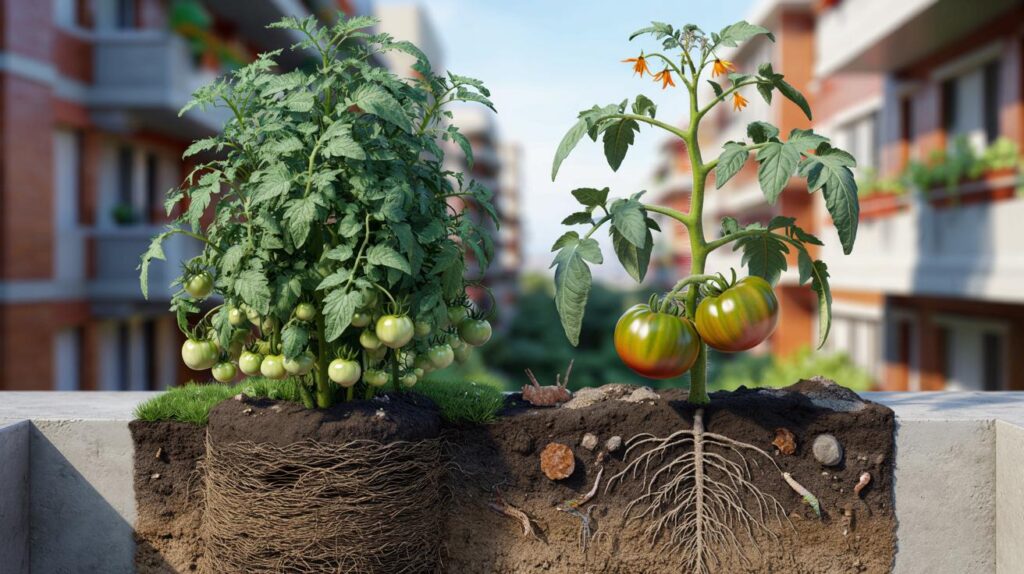
Then weeks pass. Flowers never really form. Stems stay thin. The basil bolts to seed before you’ve enjoyed more than two handfuls of leaves. The tomato vines keep stretching, but the fruits stay marble-small and stubbornly pale.
From the outside, it all seems lush. Up close, something feels stuck.

When plants look busy but go nowhere
Soil scientists have a blunt way of describing these balcony jungles and lush-but-barren beds: “all gas, no steering.” The plants are racing, just not toward adulthood. You see foliage, not maturity. Height, not harvest.
Walk through any garden center in May and you’ll spot them. Seedlings with enormous green hats of leaves sitting in very small pots. To the untrained eye, they look “strong.” To a soil specialist, they look hungry, panicked and slightly doomed.
One agronomist I spoke with in Lyon told me about a suburban vegetable patch that went viral in a local Facebook group. The photos were impressive: corn towering over the gardener, squash leaves the size of dinner plates, an almost tropical vibe. Neighbors flocked over to admire the “magic fertilizer” behind this jungle.
By late summer, the story had changed. The corn produced stunted cobs with more gaps than kernels. The squash vines looked mighty, but fruits rotted small or never formed at all. The soil lab results later showed sky‑high nitrogen, almost no available phosphorus, and compacted soil under the first 10 centimeters. It looked like abundance. It functioned like a dead end.
So what’s really happening when plants grow fast but never fully mature? Soil specialists keep returning to the same pattern: the underground architecture cannot follow the speed of the visible growth. Roots stay shallow, trapped in a thin “comfort layer” of soft soil or potting mix. Nutrients that drive structure and reproduction — phosphorus, calcium, micronutrients like boron and zinc — are out of reach or chemically locked.
The plant’s survival instinct kicks in. It invests in leaves to photosynthesize as much as possible, trying to outgrow the constraint. That fast foliage growth looks like health to us. To a soil scientist, it’s a stress signal on full volume.
What soil specialists actually do differently
When I asked a veteran soil consultant what separates thriving, mature plants from these “eternal teenagers,” he didn’t start with a miracle product. He started with a spade. His first gesture in any garden is to dig a simple test pit and just look and feel.
He crumbles the soil. Checks how deep the roots have gone. Sniffs for that forest‑floor smell that signals life. If the roots are circling in the top few centimeters, or they hit a hard, smeared layer where past tilling compressed the ground, he knows the plant will likely explode with early growth then stall exactly at that depth.
His next move is surprisingly gentle. Instead of feeding the leaves with more nitrogen‑heavy fertilizer, he works to open the soil profile. Lightly loosening deeper layers with a fork, spreading compost that’s fully matured, adding a thin mulch that invites worms and fungi to do the heavy lifting over time.
He also loves what he calls “slow keys” — rock phosphate, wood ash used cautiously, crushed eggshells, seaweed meal. These aren’t flashy. They don’t cause a growth spurt in a week. They slowly unlock the elements plants need to build strong cells and reproductive structures. *On the surface, almost nothing happens for a while, and then suddenly everything does.*
So where do most of us go wrong? Soil specialists mention the same three mistakes over and over, always with a kind of gentle sympathy. We overwater, we overfeed with quick nitrogen, and we underestimate compaction. We respond to pale leaves or slow flowers with more liquid fertilizer, more watering cans, more alarm.

Let’s be honest: nobody really does this every single day, but the label on the fertilizer bottle that says “feed weekly” sits in the back of your mind like a quiet accusation. You’re tempted to compensate. That extra hit of nitrogen gives an instant green effect, which feels like success. The deeper deficits stay untouched. Those plants look busy all season and retire having never really finished a single job.
Soil scientist Marta Rodríguez summed it up in one crisp sentence during our interview:
“Fast growth is cheap for a plant. True maturity is expensive.”
She shared the checklist she uses when a client complains that “everything grows but nothing fruits”:
- Root depth: Are most roots stuck in the top 5–10 cm of soil?
- Soil texture: Does a squeezed ball of soil stay rock hard when dry, or slimy when wet?
- Nutrient balance: Has nitrogen been added without balancing phosphorus, potassium and calcium?
- Biology: Are there visible worms, fungal threads, bits of decomposing organic matter?
- Water rhythm: Are plants getting frequent shallow watering instead of deeper, less frequent soaking?
On paper, this looks technical. On the ground, it’s just listening carefully to what the soil has been trying to say all season.
The quiet shift that changes everything in your garden
Once you see this pattern — fast green, no real adulthood — it’s hard to unsee it. You notice the potted fiddle‑leaf fig that sends out huge leaves but never thickens its trunk. The balcony tomato forest that stays flower‑light. The office peace lily with endless foliage but no blooms.
Soil specialists aren’t magicians. They just start the story underground and accept that real change is slow. They focus less on feeding the plant and more on feeding the soil community that feeds the plant. They aerate gently instead of churning. They mulch instead of leaving soil naked to sun and pounding rain. They choose fewer, deeper waterings so roots are encouraged to explore, not hover at the surface like anxious swimmers.
Some readers will feel a little uncomfortable at this point, realizing how much money has gone into liquid fertilizers and instant “bloom boosters.” Others will feel a quiet relief. Growing less but growing better is an oddly liberating idea. You don’t need the busiest, tallest plants on the block. You need plants that actually get to finish their life cycle.
We’ve all been there, that moment when you realize your proud, dense row of lettuce has suddenly bolted into bitter towers overnight. Once you’ve tasted the dull leaves that come from a stressed plant rushing toward seed, it’s difficult to romanticize speed again. Slower, deeper growth starts to feel like a kind of respect.
So next time you see that flush of fast green on a new plant, you might pause before celebrating unconditionally. You might press your fingers into the soil and notice if it stays tight and cold. You might lift the pot and realize the roots have wrapped around themselves in circles, looking for an exit that never comes.
Beneath every plant that matures fully — from first tender leaf to honest, heavy fruit — there’s almost always a story of quiet, patient soil work. Of somebody loosening, feeding, and protecting the ground long before the first flower opened. That’s not glamorous. It doesn’t photograph well. Yet this is where the real click happens between plant and place. The rest is just decoration.
| Key point | Detail | Value for the reader |
|---|---|---|
| Root depth matters more than height | Shallow roots lead to fast leaf growth but poor flowering and fruiting | Helps you diagnose why plants stall before maturity |
| Nutrient balance beats “more fertilizer” | Excess nitrogen without phosphorus, potassium and calcium locks plants into leafy growth | Prevents wasted money on the wrong products |
| Soil life is the real engine | Worms, fungi and organic matter slowly unlock deeper nutrition | Guides you toward practices that give lasting results |
FAQ:
- Why do my tomatoes grow tall but give almost no fruit?They’re often getting too much nitrogen and not enough phosphorus and potassium, or their roots are trapped in shallow, compacted soil. Focus on deeper watering, loosening the soil around the root zone and using a more balanced fertilizer.
- Can potting soil alone cause plants to stay immature?Yes, especially if it’s fresh, fluffy and high in peat or coco coir. Roots may stay in this comfortable top layer and never explore deeper, leading to fast top growth and weak reproductive development.
- Does pruning help plants mature faster?Good pruning can redirect energy, but it won’t fix poor soil or root issues. On stressed plants, hard pruning can even delay maturity because the plant has to rebuild basic structure first.
- How can I quickly tell if my soil is compacted?Try pushing a garden fork or even a wooden stick into the ground. If it stops sharply at a certain depth or your arm has to strain, you likely have a compacted layer blocking roots.
- Are fast‑release fertilizers always bad?Not always; they can help in short bursts for very depleted soils. The problem comes when they’re used repeatedly without correcting deeper structure and micronutrient balance, which keeps plants stuck in “leaf mode.”