Across France, millions of households still believe they are cutting costs by running dishwashers overnight or heating water “when electricity is cheaper.” However, changes introduced in 2025 to off-peak electricity schedules, combined with higher subscription fees, mean that many customers are now unknowingly paying more than before.
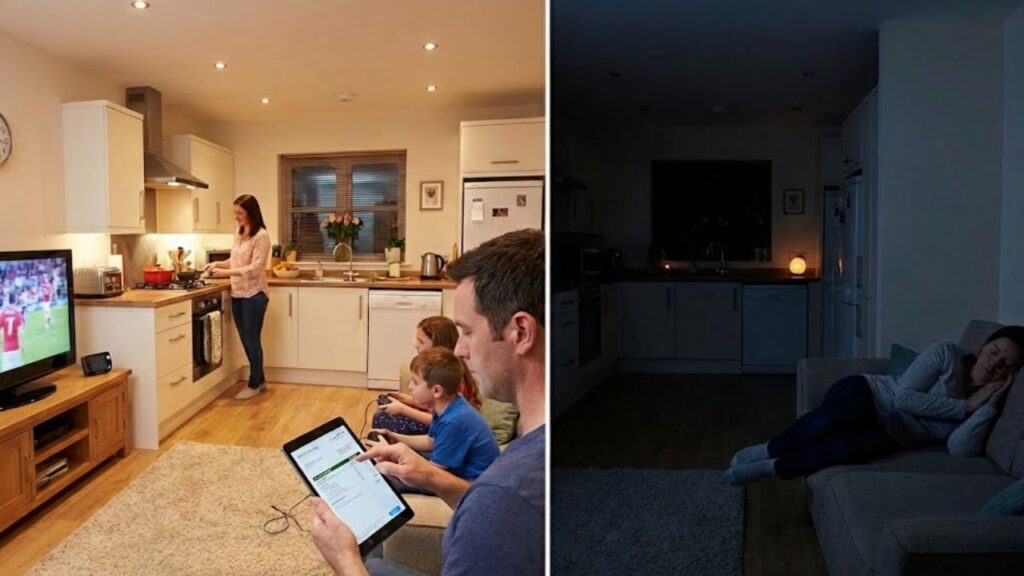
How Peak and Off-Peak Electricity Pricing Was Meant to Work
The logic behind peak and off-peak pricing is simple. Electricity costs less when demand on the grid is lower. To encourage people to shift their usage, suppliers offer two different prices per kilowatt-hour (kWh): a lower rate during off-peak hours and a higher rate during peak hours.
To access these cheaper periods, households sign a specific contract known in France as “heures pleines / heures creuses”. In exchange for lower prices at certain times, they agree to pay a higher fixed subscription fee. For years, this setup made sense for people who could easily run energy-intensive appliances at night.
The broader goal was to spread electricity demand more evenly across the day. Nighttime demand is usually low, so shifting consumption helps stabilize the grid and limits the need for additional power generation during busy periods. In theory, both consumers and the energy system benefit.
What Changed in 2025 and Why It Affects Bills
Before 2025, off-peak hours were typically grouped into one continuous nighttime block, often lasting eight hours, such as from 11 p.m. to 7 a.m. The 2025 reform altered this structure. In many regions, off-peak periods are now split between night and afternoon.
Instead of a single overnight window, households may now face several shorter off-peak slots. A common pattern includes a few hours in the early afternoon plus a reduced nighttime period. The exact schedule varies by region and depends on decisions made by the grid operator.
Off-peak electricity is no longer an “all-night” deal. It has become a scattered set of time windows that many people do not track closely. This matters because most daily electricity use still happens in the morning and evening, when people cook, shower, watch television, and charge devices. Afternoon off-peak hours are often difficult to use, especially for those who are not at home.
As a result, many customers continue behaving as if the old system were still in place. They believe they are using cheap electricity at night or in the evening, while in reality, large portions of their consumption are billed at peak rates.
Why You Need Around 40% Off-Peak Usage to Benefit
Energy specialists who analyze real household bills point to a critical threshold. To make a peak/off-peak tariff worthwhile, around 40% of total annual electricity use needs to occur during off-peak hours.
This benchmark exists for two main reasons:
- Peak-hour kWh prices are higher than those on standard single-rate tariffs.
- The monthly subscription fee is also higher on peak/off-peak contracts.
If a household only shifts about 20% of its consumption to off-peak periods, the savings from cheaper hours are often erased by higher peak prices and the increased subscription cost. In such cases, a flat, single-rate tariff is usually cheaper over the year.
Below the 40% mark, what looks like a bargain can quietly turn into a hidden surcharge on the electricity bill.
Households Most Likely to Lose Money
Not all consumers are affected equally. Certain profiles are more likely to overpay under the current system:
- Low-consumption households, such as people living alone or in small studios, whose usage is too limited to offset the higher subscription fee.
- Homes with few programmable appliances, lacking automatic water heaters or smart machines that can shift usage.
- Families whose electricity use is concentrated in the morning and evening, outside the new fragmented off-peak periods.
In contrast, larger homes that rely heavily on electricity can fare better. Properties with big hot-water tanks, storage heaters, or electric vehicles can sometimes move 50% or more of their consumption into off-peak hours, particularly overnight, and still see savings.
How to Check Whether Your Tariff Still Makes Sense
Many customers are unaware of how much electricity they actually use during off-peak hours. They only know they have an off-peak contract. However, the necessary information appears on every monthly bill.
Two quick checks can clarify the situation:
- Off-peak schedule: Review the exact daily hours listed by your supplier and note any afternoon periods.
- Consumption split: Compare the kWh used during peak and off-peak hours, then calculate the off-peak percentage.
- Subscription cost: Compare your standing charge with that of a standard single-rate tariff from the same provider.
If your off-peak share is well below 40%, your contract may no longer be suitable. Some suppliers allow customers to switch back to a flat tariff at no cost, sometimes after a short waiting period.
Real-World Examples: Who Wins and Who Loses
A Small Apartment With Limited Appliances
Consider a single person living in a 30 m² apartment, using electricity mainly for lighting, refrigeration, a laptop, and occasional cooking. Annual consumption may reach only 1,500 to 2,000 kWh. Even with careful scheduling of laundry, off-peak usage might reach just 20–25%.
In this case, the higher subscription fee and costly peak rates usually outweigh any off-peak savings. Simulations consistently show that a simple flat tariff is cheaper for this profile.
A Family Home With Electric Hot Water
Now consider a family of four in a house equipped with electric heating support and a large hot-water tank. If the tank heats exclusively at night and appliances are programmed to run during off-peak hours, off-peak usage can exceed 45%.
Under these conditions, even with split schedules, the lower off-peak price per kWh can still beat a standard tariff, particularly during winter when hot water and heating demand increase.
Key Terms That Often Cause Confusion
Peak hours are the times when electricity prices are highest, usually matching periods of heavy grid demand, such as early evenings. Under a peak/off-peak contract, these hours cost more than a standard tariff.
Off-peak hours are set by the grid operator, not the customer. They vary by location and cannot be chosen or adjusted. Suppliers simply inform households of the applicable schedule.
The standing charge, also known as the subscription fee, is the fixed monthly cost of having electricity service. On peak/off-peak contracts, this charge is typically higher than on flat-rate plans.
How to Use Off-Peak Tariffs Effectively or Know When to Leave
Households that want to keep a peak/off-peak contract need to adapt their habits actively. This often involves relying on timers and planning when energy-intensive tasks occur.
- Set water heaters and storage heaters to operate only during off-peak hours.
- Use delayed-start options on washing machines and dishwashers.
- Charge electric vehicles primarily during confirmed off-peak periods.
- Avoid running ovens, kettles, and dryers during the most expensive peak times.
For lighter users or those with fixed routines, abandoning the complex tariff may be the most sensible choice. A flat rate offers clarity and predictability, removing the need to constantly monitor the clock.
There is also a psychological factor. Some people keep off-peak options because they feel it promotes responsible behavior. However, paying more each month for that feeling rarely makes financial sense. Reviewing the contract and recent bills usually reveals whether perceived savings align with reality.