At the market, three people are standing in front of the vegetable stall, frowning at the same pile of greens. One hesitates over a big white cauliflower, another reaches for broccoli, the third squeezes a tight green cabbage like they’re checking a melon. They compare prices, talk about recipes, argue about which one is “healthier”.
The seller smiles and stays quiet. He knows a small secret that would blow their minds.
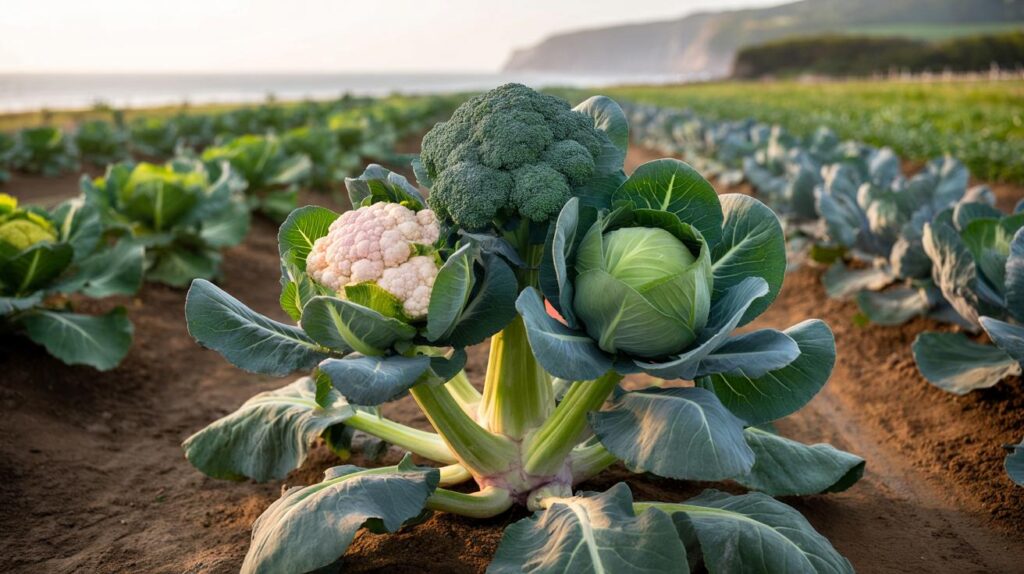
Because those three “different” vegetables? They’re basically the same plant, dressed in different outfits.

Wait… cauliflower, broccoli and cabbage are botanical siblings
You probably grew up thinking cauliflower, broccoli and cabbage were completely different vegetables, with their own personalities. Cauliflower is the bland white one, broccoli the “healthy” one parents pushed on kids, cabbage the heavy round one for soups and winter stews.
Yet on paper, they all share the same ID: Brassica oleracea. Same species. Same starting point. Just radically different shapes and textures, shaped by human hands over centuries.
Picture a wild cabbage plant on a windy European coastline, a tough, leafy thing surviving salty spray and poor soil. Farmers thousands of years ago noticed that some plants had bigger leaves, others had tighter flower buds, others formed thicker stems. So they saved seeds from the plants they liked and replanted those, season after season.
Over time, that simple habit turned into something astonishing. Big leaves became cabbage. Swollen flower heads became cauliflower. Compact green florets became broccoli. One stubborn coastal weed quietly exploded into a whole family of vegetables on our plates.
This is what botanists call “artificial selection”: humans, not nature, choosing who gets to reproduce. Nature might have favoured plants that survived storms or pests. Humans instead favoured those that tasted better, stored longer, or looked more appealing.
Little by little, those preferences rewired the plant’s body plan. The genes were the same species, but different traits were amplified. That’s why **cauliflower, broccoli, cabbage, kale, Brussels sprouts and kohlrabi** are all just different versions of the same original plant, tweaked in different directions. Same story, different chapters.
How this one plant became a whole vegetable aisle
If you look closely, you can almost read the history of this plant on each vegetable. Cabbage is basically wild cabbage with leaves bred to fold in on themselves, creating that tight, crunchy ball. Broccoli is what happens when humans fall in love with immature flower clusters and keep selecting plants whose buds are dense and tender.
Cauliflower pushes the idea to the extreme: flower buds so dense and so altered that they turn into that white, brain-like curd. Different, yes. But functionally, you’re just eating distinct body parts of the same species, magnified in different ways.
You can see the family resemblance clearly in a farmer’s field. Imagine a row of cabbages next to a row of kale, with a patch of broccoli a few metres away. The leaves have the same deep green tone, that slightly waxy surface, the same thick midribs. The smell when you crush a leaf between your fingers? Nearly identical.
That “cabbagey” scent, the one that fills the kitchen when you cook them too long, comes from similar sulfur compounds they all share. Even the pests know they’re related: the same white butterflies happily lay their eggs on cabbage, cauliflower or broccoli without making a distinction. For them, it’s all just Brassica oleracea buffet.

On the plate, the story continues. Nutritionally, all three are loaded with vitamin C, vitamin K and fibre, and they share powerful compounds linked to lower cancer risk. The differences are more about intensity and form than substance. Broccoli has more apparent “green” flavour, cabbage more sweetness when slowly cooked, cauliflower a neutral background perfect for soaking up spices or cheese.
The real twist comes in the kitchen: because they’re the same species, they often cook in similar ways, respond to the same tricks, and even substitute for one another in many recipes. Once you see them as a trio of siblings rather than strangers, your weeknight dinners suddenly become much simpler.
Cooking smarter once you know they’re the same family
One simple method changes everything: think in “methods”, not “vegetables”. Roasting, stir-frying, steaming, slow-braising. If a method works with broccoli, it almost always works with cauliflower and cabbage too, with just a tiny adjustment in time.
Try this: toss small cauliflower florets, broccoli florets and thick cabbage strips with olive oil, salt, pepper and a pinch of smoked paprika. Roast them together on a tray until the edges caramelise and turn golden-brown. You’ll taste three textures, three shapes, but a single family flavour, boosted to the max by the same treatment.
Most people treat these vegetables like separate projects, and that’s where the stress creeps in. Separate recipes, separate cooking times, separate shopping lists. Then the half-used cabbage slowly dies in the fridge drawer, while the broccoli from last week goes limp and sad.
We’ve all been there, that moment when you open the vegetable drawer and feel guilty about what you’re about to throw away. The thing is, you can often swap one for another without drama. Coleslaw with finely shredded broccoli stem? Surprisingly good. Cabbage wedges roasted like cauliflower “steaks”? Also delicious. Let’s be honest: nobody really does this every single day.
You don’t need a new recipe for every vegetable in the Brassica clan. You just need a handful of trusted techniques, and the confidence to plug any of them into that system.
- Roast aggressively
High heat (220°C / 430°F), plenty of oil, and space on the tray. Works with florets, wedges, or thick slices. - Use the whole vegetable
Thin-slice cabbage cores, peel and dice broccoli stems, chop cauliflower leaves. They cook and taste like the rest. - Blanch, then chill
Briefly boil florets or shredded cabbage, cool them quickly, then use them in salads or quick stir-fries all week. - Add acid at the end
A squeeze of lemon or splash of vinegar right before serving brightens the deep, sulfurous notes of all three. - Play with texture
Raw and shredded for crunch, lightly steamed for bite, long-braised for melting softness. Same species, new personality.
A humble supermarket secret that changes how you see your plate
Once you know cauliflower, broccoli and cabbage share the same botanical passport, the vegetable aisle feels different. That wall of greens suddenly becomes less overwhelming, more like a box of interchangeable building blocks than a series of separate puzzles. Your brain relaxes a bit.
You stop thinking, “What do I do with this?” and start asking, “Which version of this same plant do I feel like tonight?” The choice shifts from anxiety to preference.
There’s also something strangely comforting in realising how much of our food is the result of patient, human tinkering. This one species quietly adapted to our tastes, from Scottish coasts to Mediterranean kitchens, bending itself into new shapes without losing its identity. *On some level, you’re not just eating a vegetable, you’re eating a long negotiation between humans and a wild plant.*
Next time someone at the table says they “hate cabbage but love broccoli”, you’ll know what’s really going on. Same genes, different story. And you might find yourself looking at your plate with a little more curiosity, and a little more respect for that unassuming family called Brassica oleracea.
| Key point | Detail | Value for the reader |
|---|---|---|
| Botanical siblings | Cauliflower, broccoli and cabbage are all varieties of Brassica oleracea | Changes how you shop and cook, reduces stress and complexity |
| Same methods, many uses | Roasting, stir-frying, steaming and braising work across all three | Lets you improvise recipes and avoid food waste |
| Shared nutrition | Similar vitamins, fibre and protective compounds | Reassures you that swapping one for another still keeps meals healthy |
FAQ:
- Are cauliflower, broccoli and cabbage really the same species?Yes. All three belong to the species Brassica oleracea, just different cultivated varieties selected over centuries for specific traits.
- Can I substitute one for another in recipes?Often, yes. You can swap broccoli and cauliflower almost directly, and cabbage can usually replace them in soups, stir-fries and roasted dishes with small adjustments in cooking time and cut size.
- Which one is the healthiest?They’re all nutritionally strong, with vitamin C, vitamin K, fibre and beneficial plant compounds. Broccoli is slightly higher in some nutrients, but the differences are marginal if you eat them regularly.
- Why do they smell strong when cooked?Their sulfur compounds break down with heat, especially during long boiling, which releases that classic “cabbage” smell. Shorter cooking and roasting tend to smell and taste better.
- Can I grow them together in a small garden?You can, though they attract similar pests, so protection is useful. Because they’re the same species, they have similar soil, watering and climate needs, which actually makes planning easier.