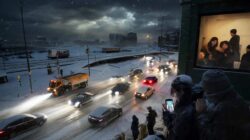
A few flakes on the weather app, a faint blue patch over the city, the kind you usually ignore in late January because recent winters have been more drizzle than drama. Then the wind sharpened, the sky turned that strange metallic gray, and within an hour the street outside was a slow-motion chaos of honking cars, spinning tires and people wrapped in blankets over office clothes.
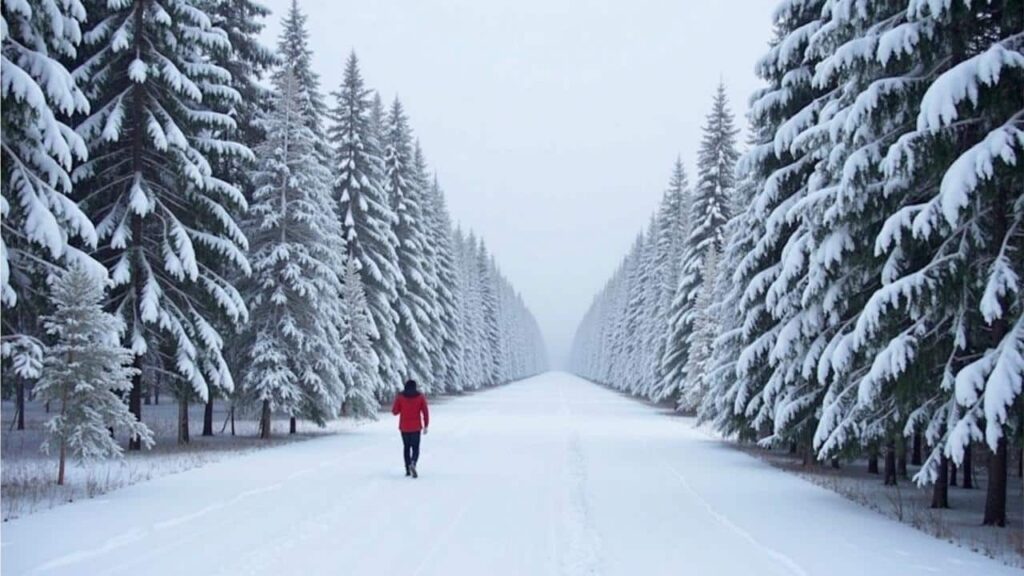
Kids screamed with delight, delivery riders cursed, and phones lit up with messages: “You seeing this?” “Power out here.” “This is insane.”
Inside apartments, people opened cupboards and realized they had more varieties of oat milk than candles.
For years, we were told winters were “getting milder.” Yet what’s arriving now feels different: a world where average winters warm, but the cold hits, when it comes, cut deeper, bite harder, and stay just long enough to break things.
The new winter isn’t gentle. It’s moody.

When winter turns on you
You wake up expecting a damp, forgettable day and instead your breath hangs in the kitchen like smoke. The weather forecast from the night before is already outdated. The temperature has plunged ten degrees. The dog refuses to go outside. The kind of cold that used to mean “once in a decade” is now crashing straight into an ordinary work week.
This is the new pattern in many parts of the world: winters that feel strangely tame until, suddenly, they don’t. Long stretches of gray, above-freezing days lull you into leaving the heavy coat in the closet. Then an Arctic blast slides south, roads freeze in a few hours, rails crack, and whole cities remember how fragile they are when water turns to ice.
Look at the maps from the last few years and the story jumps out. In Texas in February 2021, more than 4.5 million homes lost power as temperatures in some places dropped to levels colder than parts of Alaska. In Europe, “once in a century” cold snaps now show up often enough to have nicknames. In East Asia, cold extremes have shut down airports and strained gas supplies in cities that thought they’d left brutal winters behind.
Statisticians will tell you these aren’t random flukes. The data shows a world where average winter temperatures are rising, snow seasons are shrinking, yet the most dangerous cold spells refuse to disappear. They arrive like ambushes, built on years of small shifts in oceans, ice and wind patterns. On a graph, it’s a trend. On the ground, it’s your neighbor trying to thaw her pipes with a hairdryer.
Scientists have a term for one piece of this puzzle: the polar vortex. It’s not a villain from a superhero movie, it’s a band of fast winds swirling high above the Arctic, usually keeping the worst cold locked up near the pole. As the Arctic warms faster than the rest of the planet, that tight ring of wind can wobble, weaken, or split, like a spinning top about to tip.
When that happens, chunks of super-cold air spill south. Think of it like the freezer door being left slightly open. Warm air sneaks north, cold air escapes south, and the result is a strange paradox: a warming planet that still throws sharper cold punches. You may notice more freezing rain, sudden blizzards over thawed ground, icy storms in cities built for drizzle, not deep freeze.
Climate researchers argue over the exact mechanics, but the broad picture is becoming clearer. Human-driven warming is loading the dice. Milder winters are real on paper, yet *your* lived experience might be black ice on a Monday commute, pipes bursting in homes never insulated for serious cold, and school closures on days that feel like a flashback to winters your grandparents described. The climate is warming, yes. But cold extremes are learning new tricks.
Living with whiplash winters
The first practical move in this new era is simple, almost boring: act as if extreme cold will hit you at least once every few winters, even if you live somewhere that used to skate by. That means thinking ahead in small, unglamorous ways. Add insulation where you can. Wrap exposed pipes with cheap foam sleeves. Keep a stash of blankets, batteries and a phone power bank in one place you can find in the dark.
Look at your daily life through a “what if we lost heat for 24 hours?” lens. Can you close off one room to keep it warm? Do you know how to safely use a portable heater, or when not to? Do you have neighbors who might need help if the temperature suddenly drops? You don’t need a bunker. You need a few smart habits and a mental picture of what you’d do if the mild winter suddenly turns on you.
Most people wait until the cold is already outside the window. Then they rush to the hardware store for salt, torches, generators, only to find shelves picked clean. The emotional shock is real too: we still expect winter to move slowly and politely, giving us time to adapt. On a warming planet it behaves more like a switch, not a dimmer.

On a human level, whiplash winters are exhausting. One week you’re jogging in a light jacket, the next you’re scraping ice off the inside of your windows. That gap between expectation and reality is where stress lives. And when stress is high, we take shortcuts: leaving a candle too close to a curtain, running a gas oven with the door open, trying to drive “just a short distance” on black ice.
We’ve all had that moment where we stare at our weather app, swipe between models and then shrug, hoping it will all be fine. This is where quiet planning beats dramatic gestures. Choose one or two changes you can stick to: maybe it’s winterizing your balcony plants, maybe it’s learning what temperature your pipes start to risk freezing, maybe it’s setting up a neighborhood chat to check on older residents during severe cold alerts. Small steps, repeated, beat big plans forgotten.
There’s also a deeper mental shift to make. Cold extremes in a warmer climate feel wrong, so people joke about “so much for global warming,” and move on. That joke is a shield. It helps avoid admitting that the rules are changing, and our houses, cities, and routines aren’t keeping up. Soyons honnêtes : personne ne fait vraiment ça tous les jours.
“Cold snaps used to feel like a season,” says a climatologist I spoke to. “Now they feel like an event. They arrive faster, hit infrastructure that’s been quietly neglected, and leave scars that last long after the snow melts.”
This isn’t just a science story. It’s a daily life story, a money story, a health story. Cold extremes hit low-income households hardest, in drafty apartments or prepaid-meter homes where turning up the heat is a luxury, not a reflex. They test power grids designed for yesterday’s weather. They push hospital emergency rooms to the edge with falls, frostbite and heart attacks from shoveling heavy snow.
- Walk your street in your head and imagine it under sheet ice: who struggles first?
- Check your home for the two weakest points: heat loss and frozen water.
- Think of one person you’d call if the power failed at midnight – and one person who might call you.
What this new winter says about our future
The strange thing about these wild winters is how quickly we normalize them. A brutal cold snap leads the news for two days, then the next storm, the next scandal, the next viral video pushes it down the feed. Yet the pattern quietly deepens. A few bad seasons in a row and people start to say, “Winters were always like this,” even when the statistics say otherwise.
This is how climate shift often moves: not as a single disaster, but as a series of uncomfortable, slightly unbelievable days that eventually feel familiar. Cold extremes are a messenger, carrying a complicated truth: warming doesn’t erase cold, it distorts it. The seasons don’t politely slide into a new balance; they lurch, like an old machine running on a fuel it was never built for.
The next decade will likely bring more of these mixed signals. Ski resorts fighting rain in December, then buried in freak March storms. Coastal cities with palm trees and broken water mains. Farms dealing with early thaws that wake fruit trees too soon, only for a late freeze to kill the blossoms in one terrible night. Mild winters aren’t exactly “over.” They’re being hacked and glitched by a climate system under stress.
What we do with that knowledge is still up to us. Some communities are already updating building codes to handle deeper freezes, reinforcing grids, planting windbreaks, creating warm centers for people without reliable heat. Others are stuck debating whether the last cold spell “proves” or “disproves” global warming, as if the atmosphere cares about our arguments.
The shift in winter is a preview of what adaptation really looks like: messy, local, uneven, often unfair. It asks uncomfortable questions about who gets warm homes and who doesn’t, whose pipes break and who has the savings to repair them, which cities decide to spend money on resilience before the next “surprise” storm hits. We’re all living in the same planet-sized experiment, but we’re not all in it with the same coat.
Next time you feel that sudden sting of cold on a day that was meant to be mild, pause for a second. The chill on your skin is part weather, part history, part invisible chemistry from decades of burning coal, oil and gas. It’s not a simple story, and maybe that’s the hardest part. We like our seasons to be reliable characters. This new winter refuses to play along.
| Point clé | Détail | Intérêt pour le lecteur |
|---|---|---|
| Warming winters, sharper extremes | Average winter temps rise while intense cold snaps still strike | Makes sense of why you feel both “milder” and “harsher” winters |
| Polar vortex disturbances | Arctic warming can destabilize high-altitude winds, spilling cold south | Helps decode alarming headlines about sudden deep freezes |
| Everyday adaptation | Small, practical steps at home and in your neighborhood | Turns an overwhelming global issue into concrete actions |
FAQ :
- Are cold extremes compatible with global warming?Yes. The planet is warming overall, but that shifting energy can disrupt circulation patterns and still allow, or even reshape, intense cold outbreaks.
- What exactly is the polar vortex?It’s a band of strong winds high over the Arctic that usually keeps very cold air near the pole; when it weakens or wobbles, frigid air can spill into lower latitudes.
- Why do power grids fail during cold snaps?Demand for heating spikes just as equipment faces stresses from ice, snow, and extreme temperatures, exposing weak points and lack of winterization.
- Can I personally “prepare” for these new winters?You can’t control the weather, but you can reduce risk: insulate, protect pipes, store basic supplies, and build local support networks.
- Does this mean mild winters are gone for good?No, mild winters will still happen, sometimes more often, but they’ll be punctuated by sharper, more disruptive cold events that feel increasingly out of sync.