After a frenzy of record-breaking highs, precious metals have abruptly changed direction, jolting traders and small investors alike.
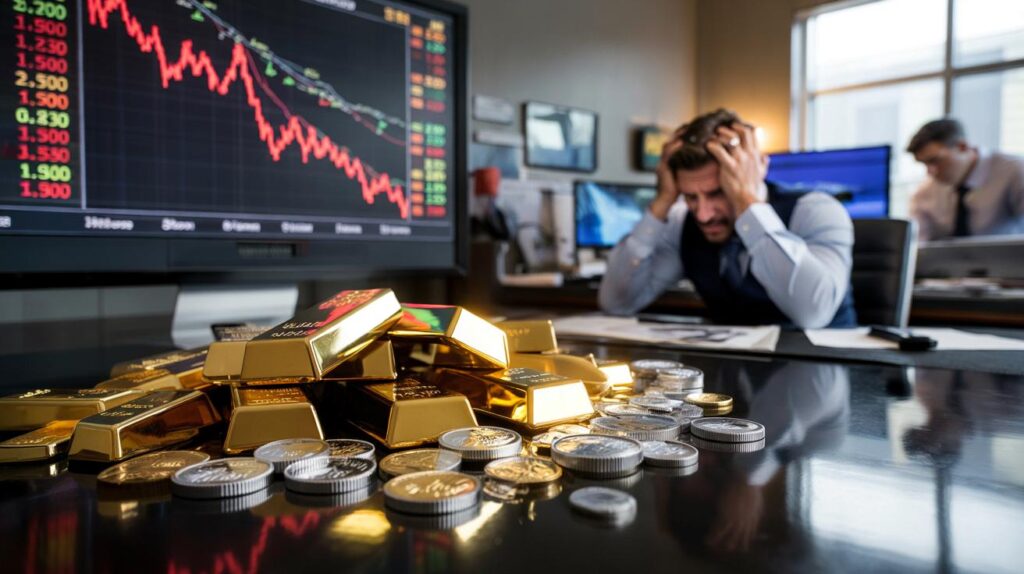
Just days after gold and silver surged to historic peaks, both metals have suffered a brutal sell-off, wiping out hundreds of dollars per ounce and reviving memories of the great precious-metals crash of 1980. The sudden reversal is rattling everyone from seasoned hedge funds to first-time buyers who queued at local gold dealers earlier this week.
The spectacular rise before the fall
The week began with what looked like a new golden age. Spot gold in New York burst through previous records, touching around 5,600 US dollars per troy ounce on Thursday. Silver followed suit, briefly trading near 120 dollars per ounce as speculative money poured into the market.

From Berlin to Boston, bullion shops reported queues stretching out the door. Some households cashed in old jewellery and heirloom coins, tempted by headlines about new all-time highs. Others did the opposite, scrambling to buy bars and coins, fearful that prices would run away from them.
On financial markets, exchange-traded funds (ETFs) tracking gold and silver saw heavy inflows, as retail investors tried to ride what looked like an unstoppable trend. Futures markets echoed the enthusiasm, with traders aggressively betting on further gains.
Within 48 hours, gold went from euphoria at 5,600 dollars to panic below 4,700 – a swing of nearly 1,000 dollars per ounce.
By Friday afternoon, the mood had flipped. Gold futures dropped back under the psychologically important 5,000-dollar line, and spot prices slid toward the 4,700 level. Silver, which had been bid up even more aggressively, fell in tandem, suffering percentage losses that market historians are already comparing with the bursting of the 1980 bubble.
Why this correction feels like 1980
Analysts stress that gold and silver are volatile assets at the best of times. Sharp pullbacks are common after steep rallies. What makes this episode stand out is the speed and scale of the move, as well as the backdrop of intense political and monetary uncertainty.
Only a year ago, gold traded below 2,800 dollars per ounce. The metal has almost doubled since then, fuelled by a mix of war, inflation fears and distrust of central banks. The latest retreat still leaves prices far above last year’s levels, but the velocity of the drop has unsettled many latecomers to the trade.
Political uncertainty and central-bank tension
The correction accelerated after fresh political headlines from Washington. President Donald Trump has nominated former Federal Reserve official Kevin Warsh as the next Fed chair, raising questions about how independent the central bank will remain from the White House.
Currency traders quickly reassessed their view of the US dollar, and bond markets swung as investors tried to gauge how a Warsh-led Fed might handle inflation and interest rates. That kind of uncertainty can cut both ways for gold: it often boosts demand as a “safe haven”, but it can also trigger profit-taking when large funds unwind crowded trades.
Mounting doubts over the future independence of the Federal Reserve have become a new wildcard for gold and silver prices.
Fear trade meets reality check
The surge in precious metals did not happen in a vacuum. In recent years, investors have faced a constant drumbeat of crises: the COVID-19 pandemic, multiple wars and proxy conflicts, rolling trade disputes and tariff threats, renewed tensions around Iran and Venezuela, and a more confrontational tone from Washington toward long-standing allies.
That backdrop revived an old instinct: when the global order feels shaky, people buy gold. As Daniel McDowell, a political scientist at Syracuse University, put it to the Associated Press, gold-buying in these periods often reflects a psychological response rather than a carefully calibrated portfolio move.
In the latest run-up, that fear trade blended with speculation. Social media channels and online forums framed gold and silver as can’t-miss hedges against a “broken system”, encouraging some buyers to borrow or move large chunks of savings into metals just as prices were peaking.
Dollar weakness and the safe-haven paradox
The recent slide in the US dollar played a crucial role. A weaker dollar tends to lift commodities priced in dollars, including gold and silver, because they become cheaper for buyers using other currencies. That helped push prices to record territory at the start of the week.
Yet once prices looked stretched, the same investors who had been piling in turned cautious. A modest bounce in the dollar and shifting expectations on interest rates were enough to trigger automated sell orders and margin calls. The result was a cascade of selling that left both metals sharply lower by the weekend.
Gold can act as a haven in storms – but when everyone rushes to the same shelter at once, the exit can get very crowded.

How the market fallout looks right now
The sudden move in precious metals has spilled over into broader markets, though not uniformly. European indices such as the DAX and Euro Stoxx 50 are still up on the day, while gold prices are flashing red on traders’ dashboards.
| Asset | Latest level | Move on day |
|---|---|---|
| Gold | 4,560.50 USD/oz | -184.60 (-3.89%) |
| DAX | 24,538.81 | +229.31 (+0.94%) |
| Dow Jones 30 | 48,892.47 | -179.13 (-0.37%) |
| EUR/USD | 1.1850 | -0.0004 (-0.04%) |
| Bitcoin (EUR) | 64,071.07 | -2,295.24 (-3.46%) |
The table underlines how abrupt the move has been: gold is falling faster than major stock indices, and roughly in line with high-volatility assets like bitcoin.
What this means for different types of investors
Small savers and jewellery sellers
For households that sold jewellery early in the week, the correction may feel like a lucky escape. Those who waited a few days to decide may now be looking at significantly lower offers from dealers.
New buyers who stepped into the market near the highs are in a tougher spot. The metal they bought “for safety” is now showing the kind of price swings usually associated with tech stocks. Many will be tempted to sell immediately to limit losses, locking in the damage.
ETF holders and traders
Investors using gold and silver ETFs are seeing the same moves, just mapped onto stock tickers. The mechanics are simple: if gold falls 4%, a fund that tracks it closely will typically drop by roughly the same amount.
For leveraged products – funds that promise double or triple the daily move of gold – the damage is amplified. A 4% fall in the underlying metal can translate into double-digit losses in a single session.
- Unleveraged gold ETF: roughly tracks spot price, one-for-one.
- 2x leveraged ETF: targets twice the daily move, up or down.
- 3x leveraged ETF: can deliver very large gains, but also very rapid losses.
Key terms and risks investors should understand
The latest turmoil highlights a few concepts that often get overlooked when fear and excitement take over:
Spot price vs. futures
The spot price is what buyers and sellers pay for immediate delivery of gold or silver. Futures are contracts to buy or sell at a set price on a future date. In calm conditions, the two move closely together. During stress, futures markets can lead moves, forcing traders to sell spot metal to meet margin calls, deepening the fall.
Safe haven – but not a guarantee
Gold is often described as a safe haven, but that does not mean it never loses value. It means that, over long stretches and across crises, it has tended to hold purchasing power better than many currencies. On shorter timeframes, it can behave more like a high-beta asset, driven by sentiment and leverage.
Anyone using gold as a stabiliser needs to think in years, not days – and be ready for violent swings along the way.
Scenario: what happens if the Fed tilts more political?
If a new Fed leadership appears more aligned with the White House, markets may expect looser monetary policy, especially ahead of elections. That could pressure the dollar, lift inflation expectations and, over time, support higher gold prices again.
Yet the transition can be messy. If investors worry that the Fed will underreact to inflation, long-term bond yields might spike. Higher real yields often hurt gold in the short run, because the metal pays no interest. That tension between inflation fears and rising yields is one reason gold’s path can look erratic even when the macro story sounds supportive.
How individuals can approach the next moves
For people considering precious metals now, the current shock offers a few practical lessons. Position size matters: holding a small portion of savings in gold as insurance is very different from putting nearly everything into one volatile asset. Time horizon matters just as much; short-term trading in metals resembles speculative gambling more than steady investing.
There is also the question of format. Physical coins and bars avoid some financial-market risks but come with storage and insurance costs. ETFs are easier to buy and sell, yet introduce counterparty and market-structure risks. Futures and leveraged products multiply these risks again and are best left to professionals who can withstand large intraday swings.
The biggest price crash since 1980 is a reminder that “safe” assets can feel anything but safe when herd behaviour takes hold.
Gold and silver still have roles to play in diversified portfolios, particularly when trust in institutions is fragile. Yet the past few days show how quickly a rush for protection can turn into a painful lesson in volatility for anyone who mistook fear-driven momentum for a one-way bet.