The instinct feels generous and comforting: if we keep the feeders full, the robins and tits will make it through the night. Yet in Norway, where winters are harsher, darker and far longer, you’ll struggle to find the same frenzy of bird-feeding. That contrast raises an awkward question: are they being cold… or are we getting nature wrong?
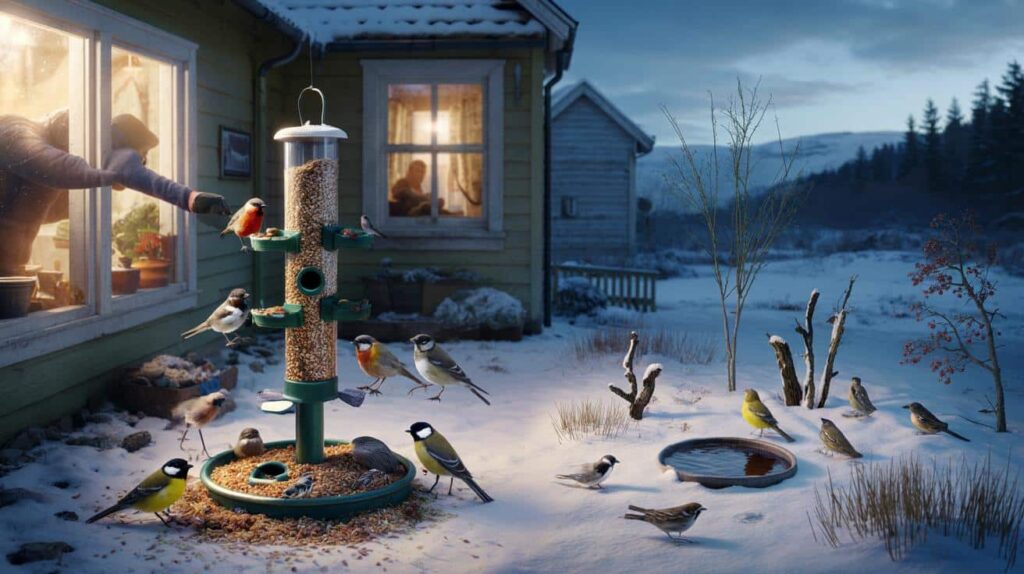
Our overflowing feeders, their quiet restraint
Walk through a typical British or French suburb in January and you see the same picture: plastic silos, coconut halves, nets of peanuts, all topped up religiously. Bird-feeding has drifted from occasional support into a comforting daily ritual, almost a hobby in itself.
The full feeder as a sign of hospitality
In many Western homes, an empty feeder feels like a moral failure. We project our own sensations of hunger and cold onto birds. The garden becomes an extension of the kitchen table.

We treat garden birds less like wild animals and more like tiny guests who rely on our generosity to survive.
That emotional link is powerful. People recognise “their” robins, worry when blue tits don’t appear at breakfast time, and top up seed the instant the tube looks bare. The result is a permanent, all-you-can-eat buffet. Birds quickly learn that this address never runs out.
There is comfort in that image. Yet it overlooks something basic: these animals evolved to handle bitter winters long before we invented peanut cakes and sunflower hearts.
The Norwegian view: wild means independent
In Norway, the cultural instinct is different. Birds are admired, but they are still firmly seen as wild. Their survival is understood as the result of adaptation, not human charity.
Norwegians do feed birds in some places, especially around houses and cabins. But large-scale, daily provisioning is far less common and far more conditional. Feeding is seen as an exception, not a duty.
The Norwegian approach rests on a simple idea: the more you intervene in a wild animal’s diet, the more you risk domesticating it.
Help may come in brutal weather events, when ice locks away every natural food source. Yet the aim is not to become irreplaceable. Once conditions improve, people step back. That emotional distance can feel cold from the outside. From an ecological perspective, it protects the birds’ independence.
When kindness turns into ecological life support
The clash is not just cultural. Ecologists warn that constant feeding changes how birds behave, move and even reproduce.
From survival skills to dependence
Natural foraging is slow and demanding. A great tit may need to comb bark for larvae, probe dead wood for insects, or search frozen soil for scattered seeds. Calories are hard won.
A feeder rewrites that equation. Everything is in one place, all day, every day. Over time, some birds adjust their behaviour around this certainty.
If the buffet never closes, the incentive to maintain sharp foraging skills fades.
Research in several countries has shown that heavy reliance on backyard feeding can create local populations that are less flexible. If a homeowner moves, goes on holiday, or simply stops feeding, many birds face a sudden shock. Instincts are still there, but practice has slipped. That gap can make the difference in a late cold snap.
Crowds, droppings and fast-spreading disease
There is another, more visible side-effect: crowding. In a natural landscape, birds spread out to find food. Around a busy feeder, they pile in.
- Different species share the same narrow perches.
- Dropped seed accumulates under the feeder.
- Birds walk and feed in each other’s droppings.
This tight contact is ideal for pathogens. Outbreaks of trichomoniasis in finches and salmonella in garden birds have repeatedly been linked to dirty feeders and contaminated ground.
A poorly maintained feeder can flip from life-saving refuelling point to compact epidemic hub within days.
Cleaning helps, but the underlying issue remains: we are artificially gathering birds that, by nature, would maintain more distance.
February: the invisible turning point Norwegians respect
The human eye sees snow and frost. A bird’s body sees something else entirely: light. By February, days in Europe are stretching, even when temperatures still bite.
From winter truce to territorial tension
Longer days change hormone levels. Birds start shifting out of winter mode and preparing for breeding. That means bigger territorial instincts and more aggression.
The same birds that tolerated each other at the feeder in January are primed to become rivals by late February.
Yet in many gardens, feeding continues at full pace. Food remains concentrated in one spot just as birds are biologically driven to spread out and claim territory. The result is stress, chasing and fights around the feeder. Calories burned in conflict are calories not used for building body condition ahead of the nesting season.
Rich food, confused timing
There is also a hormonal twist. Constant access to very rich, fatty food beyond late winter can give the body a misleading signal: “resources are booming, start early”.

If birds move into breeding mode too soon, they risk a mismatch with the environment. Early chicks may hatch when insect numbers are still low or weather remains unstable. That gap between internal clock and external reality can hit survival rates quietly, year after year.
Norwegian practice tends to follow daylight and natural cues more closely. As days lengthen, human help recedes. The aim is to let birds sync with spring on nature’s terms, not the contents of a garden centre shelf.
The “Norwegian method” of stepping back
Stopping overnight is risky once birds have integrated your feeder into their daily energy budget. A controlled phase-out makes far more sense.
Dialling down the rations
From the first mild spells in February, one strategy is to treat feeders as snacks rather than full meals.
| Period | Suggested change |
|---|---|
| Early February | Keep feeding, but reduce portions slightly. |
| Late February | Halve fat balls or seed amounts; stop refilling immediately. |
| Early March | Feed only small amounts on some days; no “top-ups”. |
| Mid–late March | Phase out completely, unless an extreme cold snap hits. |
That constant, low-level shortage pushes birds to spend more time searching the garden for natural food. Autonomy starts to return before nesting even begins.
Making food unpredictable
A second lever is timing. Instead of a strict daily routine, people can begin skipping days.
When tomorrow’s food is uncertain, birds automatically widen their search area and stop relying on a single address.
Going from daily feeding to, say, four days a week, then two, makes your garden one resource among many, not the only lifeline. That pattern resembles the sporadic support Norwegians offer during the very worst spells, rather than the 90-day winter subscription many of us unknowingly run.
Why a full feeder in spring can quietly damage chicks
The trickiest part of this story sits not in winter, but in April and May, when nest boxes are full and tiny beaks are open.
Seed is junk food for nestlings
Adult tits and finches can survive perfectly well on seeds and fat during cold months. Their metabolism and gut are built to cope. Nestlings are different.
Baby birds are essentially protein-building machines; they need insects, caterpillars and spiders, not sunflower hearts.
High-fat seeds and blocks lack the amino acids, water and micronutrients required for rapid tissue and feather growth. If parents fall back on feeder food out of habit or convenience, chicks can grow slowly, suffer from dehydration, and leave the nest in poor condition.
When bodies grow wrong
Wildlife carers and rehabilitators increasingly report young birds with bone and wing deformities linked to poor early diets. Wings may twist, bones can develop unevenly, or birds simply carry too much weight for their frame.
On paper those chicks survived the nest. In reality, many are doomed. Flight is compromised, escape from predators becomes harder, and long-term health is weakened. Ending feeding before spring fully arrives forces parents to do what nature designed them to do: hunt soft, protein-rich invertebrates for their young.
Loving birds without making yourself the hero
The Norwegian stance raises a disquieting question for the rest of us. Do we feed birds mainly for their welfare, or because having them at arm’s length makes winter feel less bleak?
Learning to watch, not manage
There is a quiet discipline in standing back. Trusting that a robin can weather a cold snap without your daily refill challenges the need to be central. Yet that restraint supports something bigger: resilience.
Wild species are built for uncertainty; our task is not to remove every hardship, but to avoid adding new ones.
Short, targeted help during brutal conditions can still save lives. The key is refusing to turn that into a permanent life-support system that slowly reshapes instincts, movements and breeding cycles.
Turn your garden into habitat, not a vending machine
None of this means your garden has to be empty or lifeless. The focus simply shifts from feeding to structure.
- Plant native berry-bearing shrubs instead of ornamental exotics.
- Leave a corner of long grass and wildflowers for seeds and insects.
- Keep some dead wood and leaf litter as invertebrate nurseries.
- Use water: a shallow, regularly cleaned bird bath can be as valuable as a feeder.
These small changes create year-round, self-renewing food sources. Birds still visit, but on their own terms. They can choose routes, vary diets and maintain the skills they need when your garden is empty and the weather is brutal.
For anyone used to topping up feeders every evening, the Norwegian way may feel oddly hands-off. Yet by gradually reducing food after February and investing more effort in habitat, you keep what truly matters: birds that are wild, capable and free to cope with whatever next winter decides to throw at them.