Plenty of people quietly battle with see-through ends, limp roots and the constant urge to tie hair back. Yet a few smart changes to routine, styling and lifestyle can turn that fragile look into something fuller, bouncier and far more confident.
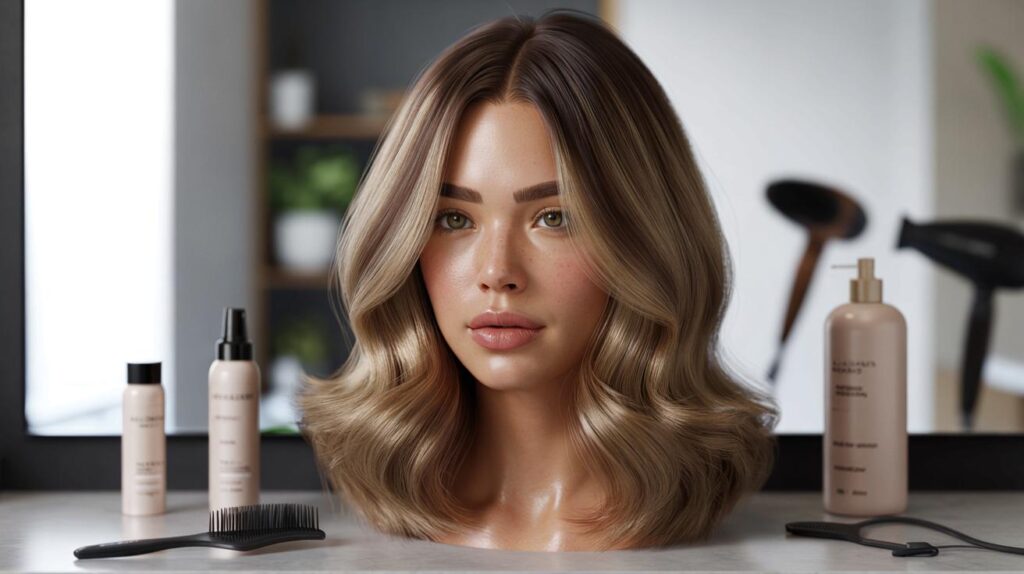
Why some hair is naturally fine
Fine hair isn’t a failure of grooming; it’s often written in your genes. Each strand simply has a smaller diameter, so it bends more easily and reflects light differently.
- Fine hair = small diameter, can be dense or sparse.
- Thin hair = fewer strands per square centimetre.
- You can have both: fine and thin hair, which looks especially flat.
Hormones, stress, illness, medication and age can reduce hair density over time. Colour treatments and heat styling roughen the cuticle, making already slender strands look frayed.

Fine or thin hair needs strategy, not punishment: gentle care, targeted products and styling that works with its nature.
1. Cleanse the scalp like skincare, not like laundry
People with flat hair often wash more, chasing that “fresh” lift. Overwashing, though, can irritate the scalp and push oil production into overdrive.
Choose the right shampoo
Look for labels such as “volumising”, “lightweight”, “for fine hair” or “scalp balancing”. These usually contain fewer heavy silicones and oils that weigh strands down.
- Use a clarifying shampoo once every 1–2 weeks if you use lots of styling products.
- On other days, stick to a mild, sulfate-free formula.
- Focus shampoo on the scalp and roots, not mid-lengths and ends.
If your roots are oily by day two but your lengths feel dry, try a “hybrid” wash: shampoo just the scalp under the showerhead, then quickly rinse through.
Rethink conditioner placement
Heavy conditioner at the roots is the enemy of lift. Apply only from mid-lengths to ends, combing it through with your fingers. Leave it on for a couple of minutes rather than ten.
2. Cut and colour that fake thickness
A clever cut can add more visual volume than any product.
Go for shape, not length at any cost
Very long hair drags fine strands down. Shorter shapes make them appear denser.
- Blunt bobs or lobs instantly make ends look fuller.
- Soft, internal layers (not choppy ones) add movement without stringiness.
- Side fringes or curtain bangs create the illusion of more hair around the face.
Ask your stylist to avoid extreme thinning shears on already-fine hair. They can create wispy, transparent patches that are hard to style.
Colour as optical illusion
Subtle, multi-tonal colour tricks the eye into seeing depth.
| Technique | How it helps fine hair |
|---|---|
| Baby lights | Very fine highlights add dimension without harsh lines. |
| Root shadow | A slightly darker root makes hair look thicker at the base. |
| Gloss/toner | Smooths the cuticle so strands reflect light evenly. |
One or two shades of contrast in colour can create more “volume” to the eye than several extra centimetres of length.
3. Style from the scalp up
Fine hair usually lies close to the scalp. The trick is to change the angle at which it dries and sits.
Master the rough-dry
Instead of smoothing hair flat with a brush from the start, flip your head upside down and use your fingers while drying the roots. Once hair is about 80% dry, flip back and shape with a round brush or hot brush.
- Keep the dryer on medium heat to limit damage.
- Direct airflow against the way the hair naturally lies for extra lift.
- Finish with a cool shot to lock in the new shape.
Choose products that build, not smother
Fine hair responds better to light, layered products than one heavy cream.
- Volumising mousse or foam at the roots for structure.
- Lightweight spray or milk on lengths to reduce frizz.
- Texturising spray on dry hair for grip and “hold”.
If a product feels slippery, waxy or creamy in your hands, use half the amount you think you need on fine hair.
4. Strengthen strands from the inside
Hair is not living tissue once it leaves the scalp, but the follicles are. They’re sensitive to nutrition, stress and hormones.
Nutrition that supports thickness
Balanced eating will not turn baby-fine hair into a mane, yet deficiency can make shedding worse.
- Protein from fish, eggs, beans and lean meat provides building blocks for keratin.
- Iron, zinc and vitamin D support normal hair growth cycles.
- Omega-3 fatty acids nourish the scalp’s barrier.
If you notice sudden shedding, new bald patches or thinning eyebrows, speak to a doctor before buying supplements. Conditions like iron-deficiency anaemia or thyroid imbalance need proper diagnosis.

Daily habits that matter
Smoking, chronic lack of sleep and constant crash dieting are linked with weaker, slower-growing hair. Gentle exercise and good sleep hygiene help regulate hormones that influence follicles.
Think of dense, resilient hair as a slow reward for consistent, boring healthy habits rather than a quick fix in a bottle.
5. Protect fine hair from breakage
Fine fibres snap more easily, so ends look frayed even if your scalp grows hair normally.
Smart brushing and drying
Wet hair stretches and breaks. Squeeze water out with a soft T-shirt or microfibre towel instead of rough rubbing.
- Use a wide-tooth comb on damp hair, starting at the ends.
- Work upwards in sections to avoid pulling on the roots.
- Avoid brushing just “for something to do”; each stroke adds friction.
Heat styling should be strategic, not daily by default. Use a heat protectant spray and keep tools below around 180°C/350°F for most fine hair types.
Night-time care
Friction from cotton pillowcases can roughen delicate strands.
- Switch to a silk or satin pillowcase to reduce tangling.
- Loosely braid long hair at night or twist into a soft scrunchie.
- A small amount of light serum on the ends helps prevent overnight dryness.
6. Work with your natural texture, not against it
Many people with fine hair constantly straighten or curl it into shapes that fight its instinct. That daily battle thins it in the long run.
If your fine hair is straight
Lean into movement instead of attempting huge waves every day.
- Use a salt spray on damp hair and scrunch for soft, air-dried texture.
- Ask your stylist for a cut that creates a slight bend at the mid-lengths.
- Try velcro rollers at the crown for lift without intense heat.
If your fine hair is wavy
Waves can make hair look fuller, as long as they’re defined.
- Apply a light curl cream or gel only to mid-lengths and ends.
- Diffuse on low speed, high heat, touching the hair as little as possible.
- Use a pea-sized amount of oil afterwards if needed, not before.
The less you fight what your hair wants to do, the less damage you create, and the thicker it looks across a year.
When thinning signals something else
Not all fine-looking hair is just a texture quirk. Gradual widening of the part, increased scalp visibility or shedding in clumps can indicate androgenetic alopecia, autoimmune issues or side effects from medication.
Dermatologists and trichologists can assess the scalp, run tests and suggest treatments such as topical minoxidil, prescription medications or in some cases procedural options. Starting early tends to preserve more density than waiting until hair is very sparse.
Practical routines for different lifestyles
The “no-time” routine
If you have five minutes in the morning:
- Dry shampoo the roots for lift.
- Texturising spray through mid-lengths.
- Rough side parting to instantly change how full hair looks.
The “weekend reset” routine
Once a week, spend more time:
- Clarifying shampoo on the scalp.
- Lightweight mask only on lengths for 5–7 minutes.
- Careful blow-dry with root lift and a cool shot to set.
Key terms people mix up
The hair conversation is full of jargon that can confuse choices.
- Density: how many hairs grow on the scalp.
- Diameter: how thick each individual strand is.
- Porosity: how easily hair absorbs and loses water and product.
Fine hair can still be high-porosity after bleach or heat, meaning it soaks up product quickly and feels rough. That kind of hair often needs protein-balancing masks but in small, carefully spaced doses.
Understanding whether you’re dealing with fewer hairs, slimmer hairs, or damaged hairs steers you toward the right kind of “thickening” strategy.
Small adjustments — the way you shampoo, how your stylist shapes your cut, the temperature of your tools — compound over months. Fine or thin hair rarely transforms overnight, yet with consistent care it can shift from fragile and flat to a texture that feels like yours, just on its best behaviour more often.