For anyone trying to eat “healthier carbs”, that stubborn bite can feel like a culinary mystery — or a kitchen failure. But the slow, firm behaviour of brown rice has little to do with your cooking skills and everything to do with the grain’s anatomy, its processing and even how long it sat on the shelf before reaching your saucepan.
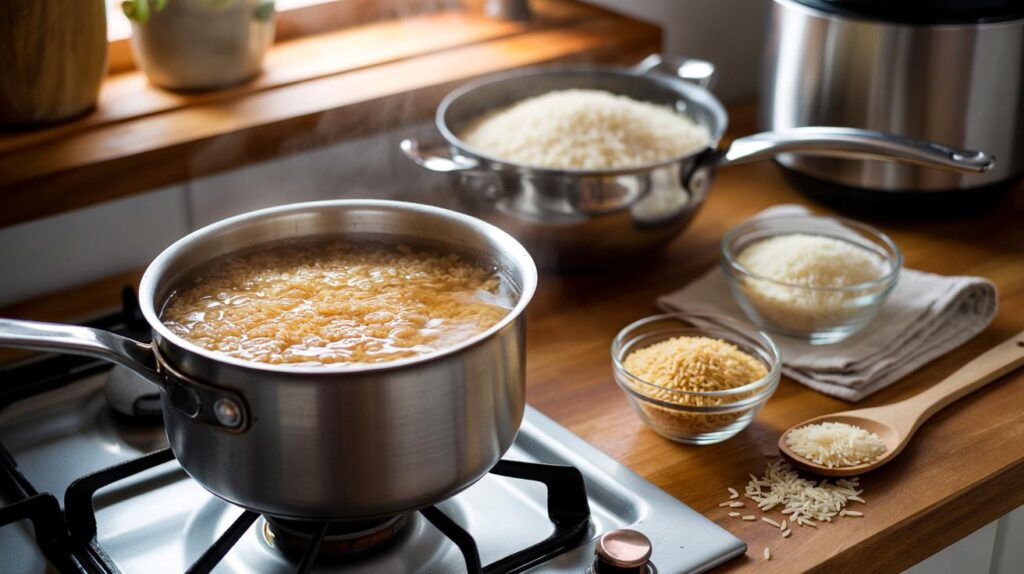
What brown rice really is
White and brown rice start out as the same grain. What changes is how much of that grain is stripped away.
Brown rice has only the inedible outer hull removed. It keeps the bran (often called the “bran layer”) and the germ, the tiny part that can sprout into a new plant. White rice, by contrast, has both hull and bran removed and usually loses the germ too.

Brown rice is a whole grain: it keeps its fibrous bran and nutrient-rich germ, while white rice is essentially the starchy core.
That difference sounds minor, but it reshapes everything: nutrition, flavour, shelf life and, crucially, what happens when the grain meets boiling water.
How structure changes the bite
The bran that clings to brown rice is packed with insoluble fibre. These fibres are rich in cellulose and other structural components that plants use as a kind of armour.
When heated, those fibrous walls do not easily fall apart. They form a protective jacket around the softer starch inside. This jacket slows down the passage of hot water into the core of the grain.
White rice, stripped of this jacket, absorbs water quickly. The starch swells and softens in minutes, giving that fluffy texture many people grew up with.
Why brown rice takes longer on the stove
Cooking rice is largely about what happens to starch. As the grain heats in water, starch granules swell and gelatinise — that’s when they absorb water, expand and turn from hard to tender.
With brown rice, this process is delayed. The bran layer works like a semi-permeable barrier, slowing how fast water and heat reach the starch.
The tough bran layer acts as a gatekeeper, delaying starch softening and stretching cooking times well beyond those of white rice.
That is why standard brown rice usually needs around 30 to 45 minutes on the hob, compared with roughly 15 to 20 minutes for many types of white rice. Shorter-grain brown varieties can be slightly quicker, while older or poorly stored grains can be slower still.
The role of insoluble fibre
Much of the delay comes from insoluble fibre, the same kind of material found in wheat bran and many vegetables. This fibre:
- does not dissolve in water
- keeps its structure at cooking temperatures
- prevents the grain from collapsing into softness too fast
All that means the grain stays intact and the centre remains firm for longer, even as the outer layers start to soften.
Why it can stay firm even after “too long” cooking
Many home cooks report the same scenario: the pan has been simmering forever, the water is almost gone, and yet the rice still has a noticeable chew.
There are a few reasons this happens, beyond just “that’s brown rice”.
Grain age and storage
Rice that has been sitting in a cupboard for months, or stored in warm conditions, can dry out internally. The drier the grain, the more water it needs to rehydrate properly.
In practice, that means older brown rice may never achieve the same tenderness as a fresher batch, even with extra time. It can remain firm at the core, giving the impression of being undercooked.
Water ratio and heat control
Using the same water ratio as white rice is one of the most common mistakes. Brown rice generally needs more water for full hydration.

Too high a flame can also cause water to evaporate faster than the grains can absorb it. The result is rice that is cooked on the outside, but still slightly stiff inside.
Brown rice is naturally chewier than white rice. A gentle “al dente” bite can mean it is perfectly cooked, not raw.
That lingering firmness is part of its character. Expecting it to turn as soft and yielding as a long-grain white rice will usually end in disappointment.
How to get softer brown rice at home
The good news: that firm texture is adjustable. With a few changes, brown rice can become noticeably softer and easier to enjoy day after day.
| Technique | What to do | Effect on texture |
|---|---|---|
| Pre-soaking | Cover the grains with water for 30 minutes to up to 8 hours before cooking. | Softens the bran layer and shortens cooking time. |
| Extra water | Use roughly 2.5 to 3 cups of water for each cup of rice. | Helps the centre of the grain hydrate fully. |
| Low, steady heat | Keep the lid on and maintain a gentle simmer, not a hard boil. | Encourages even cooking without drying the grains. |
| Resting time | Turn off the heat and leave the pan covered for 5 to 10 minutes. | Allows remaining moisture to redistribute, improving softness. |
| Pressure or electric cooker | Use a pressure cooker or rice cooker where available. | Higher, stable temperature and pressure break down the bran faster. |
| Fat in the pan | Start by toasting the rice briefly in oil or olive oil. | Makes the mouthfeel smoother and the grains less tough. |
Pressure cookers and electric rice cookers are particularly effective for those who want softer results without constant monitoring. They control both temperature and pressure, pushing water deeper into the grain more quickly.
Nutrition, flavour and shelf life: the trade-off
The same outer layers that test your patience at the stove also carry many of the nutrients that made brown rice popular among dietitians.
Because the bran and germ remain, brown rice typically contains more B vitamins, minerals such as magnesium and phosphorus, and bioactive compounds that are removed when rice is polished into white form. It also has a higher fibre content, which supports digestion and helps you feel full for longer.
The chewy bran that slows cooking is the same layer that delivers extra fibre, micronutrients and a nuttier flavour.
There is a cost, though. Those outer layers contain natural oils. Over time, these fats can oxidise, giving the rice a stale or slightly rancid smell. Brown rice therefore tends to have a shorter shelf life than white.
How to store brown rice properly
To keep texture, flavour and nutrients for as long as possible, storage conditions matter.
- Keep brown rice in a cool, dry, dark place, away from direct sunlight.
- Use an airtight container to protect it from moisture and odours.
- For long-term storage, many people refrigerate or even freeze brown rice to slow down oxidation.
Colour alone is not a reliable guide to quality. Brown rice can range from light beige to a deeper brown depending on variety and processing, without that necessarily signalling a loss of nutrients.
Practical scenarios in the kitchen
Imagine two pots on a weekday evening: one with white rice, one with brown. You turn both on at the same time. Fifteen minutes later, the white rice is ready to serve, while the brown is still visibly firm. Without planning, that timing mismatch can throw off a meal.
One way around this is to treat brown rice more like dried beans than like white rice. Soaking in the morning, or even cooking a larger batch ahead of time and refrigerating portions for the week, can make weekday dinners easier. Reheated brown rice, if stored safely, tends to hold its shape well and doesn’t collapse into mush as quickly as white rice can.
When a firmer texture is an advantage
The resilience of brown rice actually works in its favour in some dishes. Salads, grain bowls and stuffed vegetables benefit from grains that keep their form and a soft bite instead of turning gluey.
Mixed with lentils or chickpeas, that chewiness can create more interesting textures and slow down eating, which some nutritionists view as helpful for appetite control. The nutty, almost toasted flavour that comes from the germ also pairs well with roasted vegetables, seeds and stronger seasonings like soy sauce or miso.
For people shifting from white to brown rice, a gradual transition can help. Combining the two in the same pot — adjusting water for the brown grains — introduces the idea that not all rice must be fluffy and soft, while keeping some of the familiar textures on the plate.