Many people plan walks, yoga sessions, and short breaks to recharge, only to return to their routines still feeling oddly exhausted. The cause often isn’t a major life issue, but something far quieter. Small, everyday social exchanges may be quietly wearing you down without you realising it.
The subtle social drain hiding in plain sight
Think about an average day. You greet coworkers, respond to messages, react to a friend’s post, chat briefly by the coffee machine, and exchange a polite nod with a neighbour. These moments seem harmless and even necessary for a healthy social life.
However, psychologists increasingly point to constant micro-interactions as a source of ongoing fatigue. Each interaction feels insignificant on its own, but together they can leave you mentally depleted long before the day ends.
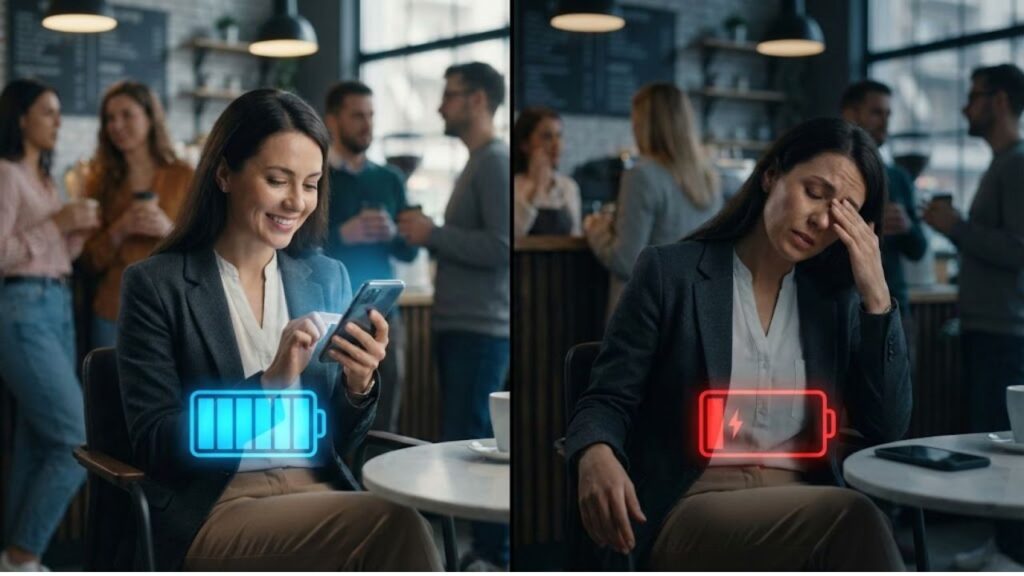
Micro-interactions function like background apps on a phone. Each one uses only a little energy, but when too many are running at once, your mental battery drops quickly.
Because these exchanges don’t feel demanding, we rarely count them as effort. When exhaustion shows up, we blame sleep, diet, or workload, overlooking the dozens of tiny social performances we’ve already managed since morning.
What actually qualifies as a micro-interaction?
Micro-interactions are brief, low-pressure social moments that still require you to stay socially engaged. Common examples include:
- Replying to a “quick” message or work chat
- Smiling and saying hello in a hallway
- Reacting to a story or post on social media
- Making small talk near the kettle or coffee machine
- Answering a neighbour’s casual question
- Writing a polite email you didn’t initiate
None of these should be exhausting alone. The issue arises when your entire day becomes fragmented by constant social contact.
Why casual interactions demand more from your brain
From a cognitive standpoint, every social exchange triggers a quick internal process. Your brain reads the situation, gauges expectations, adjusts tone, and manages facial expressions almost instantly. You may barely notice it, but your nervous system does.
The mental cost of staying socially regulated
This process is known as self-regulation. It involves filtering impulses, managing emotions, and aligning behaviour with social norms. That regulation consumes real mental energy.
Over the course of a day, this can include:
- Choosing words carefully to avoid offence
- Smiling when you feel flat or tense
- Remaining polite when you want to end a conversation
- Monitoring how you’re perceived and adjusting accordingly
Each effort is small. Repeated every few minutes, they create a long stretch of emotional self-management. The result is often social saturation before the workday is even over.
Subtle signs your social energy is leaking
Because there is no obvious stressor, fatigue linked to micro-interactions can feel confusing. People often notice vague tiredness, irritability, or a strong urge to withdraw without understanding why.
These symptoms are easy to misinterpret. Many respond with self-criticism, wondering why they feel antisocial or less capable than others. That guilt adds another layer of emotional strain.
Why some people feel this drain more intensely
Micro-interactions don’t affect everyone equally. Certain factors increase their mental cost:
- Introversion, where solitude is needed to recharge
- Social anxiety, which raises the stakes of each exchange
- Masked neurodivergence, where maintaining a social façade is especially exhausting
- Customer-facing roles that involve constant interaction
Digital communication amplifies this effect. Messages can arrive at any hour, extending social performance well into the evening.
Protecting your energy without isolating yourself
Eliminating micro-interactions entirely isn’t realistic or healthy. Connection matters. The goal is to manage how often, when, and how intensely you engage so these moments stop draining your energy.
This isn’t about withdrawing from people, but about choosing when and how you show up.
Create softer boundaries around availability
Instant replies feel courteous, but they train others to expect constant access. That expectation keeps your nervous system on alert.
- Pause before replying to non-urgent messages
- Turn off unnecessary notifications
- Batch responses into short, focused periods
- Let close contacts know replies may be slower at times
These steps reduce constant interruptions and allow for longer stretches of mental calm.
Release the pressure to perform
Many people feel they must always appear friendly, upbeat, and available. That belief turns every interaction into a performance. Allowing yourself to be good enough rather than impressive can significantly reduce fatigue.
This might involve:
- Using shorter, neutral replies when tired
- Offering a nod instead of a forced smile
- Saying, “I’m a bit wiped, can we talk later?”
Build intentional moments of silence
Silence is often mistaken for disengagement, yet it works as a reset for overwhelmed minds. Short breaks from input help the nervous system settle.
Silence is not a social failure; it’s a biological requirement, similar to rest or nourishment.
Simple ways to introduce it include:
- Walking part of your commute without headphones
- Spending a few minutes alone after work
- Keeping at least one weekly activity phone-free
When micro-interactions pile onto other pressures
These social demands rarely exist alone. They sit alongside deadlines, caregiving, financial concerns, and constant news exposure. Together, they can resemble burnout even when your schedule appears manageable.
Over time, this uninterrupted stream of interaction may show up as chronic exhaustion, emotional dullness, and reduced tolerance for any added demand.
Simple experiments to test your social load
If you’re unsure whether micro-interactions are affecting your energy, small trials can offer clarity:
- The delayed reply test: For one day, wait at least an hour before responding to non-urgent messages.
- The silent commute: Take one daily journey without calls, audio, or scrolling.
- The no-comment rule: Skip reacting to every post or story for a week.
If your energy improves, even slightly, it suggests your brain benefits from fewer low-level social demands.
Putting words to this experience also helps. Phrases like “social battery” or “interaction fatigue” make it easier to explain that quietness is about capacity, not disinterest.
Normalising delayed replies, silence, or closed doors allows relationships and workplaces to respect these boundaries. These small adjustments protect the mental energy that sustains empathy, creativity, and connection over time.