The friend who grew up poor is often the one silently calculating while the queue inches forward, hand hesitating over the cheaper option, eyes scanning price-per-kilo labels like a second language.
They joke about “being broke” even now, when their salary is stable. They skip a drink at the bar to make sure the electricity bill is paid on time, and no one notices the small knot of tension held tightly in their shoulders.
On paper, they’ve made it. In their body, they’re still bracing.
Here’s how that quietly shows up.
1. They monitor every cent, even when it’s no longer necessary
One of the most common traits among adults who grew up with very little is an intense awareness of money. They don’t just have a rough sense of their balance; they usually know the exact amount, what’s scheduled to leave, and when.
Restaurant prices are automatically translated into hours of work. An unplanned purchase, even a small one, can trigger an immediate urge to check their bank account.
To someone who never experienced shortage, this can look excessive. To them, it’s simply how you stay safe in a world that once felt like it could cut the lights without warning.
Take Carla, who now earns a comfortable income in marketing. While her colleagues casually order takeout, she opens her banking app first. In her mind, money is divided into three categories: rent and bills, non-negotiables like transport, and everything else.
If her balance dips below a private threshold, her stomach tightens. She skips lunch, says she isn’t hungry, and eats the sandwich she packed from home.
No one sees the calculation. They just see the container.
This isn’t greed or stinginess. It’s a survival system learned early, when one unexpected bill could collapse an entire month. The brain links vigilance with safety, and that lesson doesn’t fade just because income improves.
Financial trauma follows the nervous system, not the calendar.
2. They stockpile “just in case”, from objects to opportunities
Adults who grew up poor often hold on tightly. Not only to items, but to chances, contacts, side gigs, subscriptions, free samples, and discount codes.
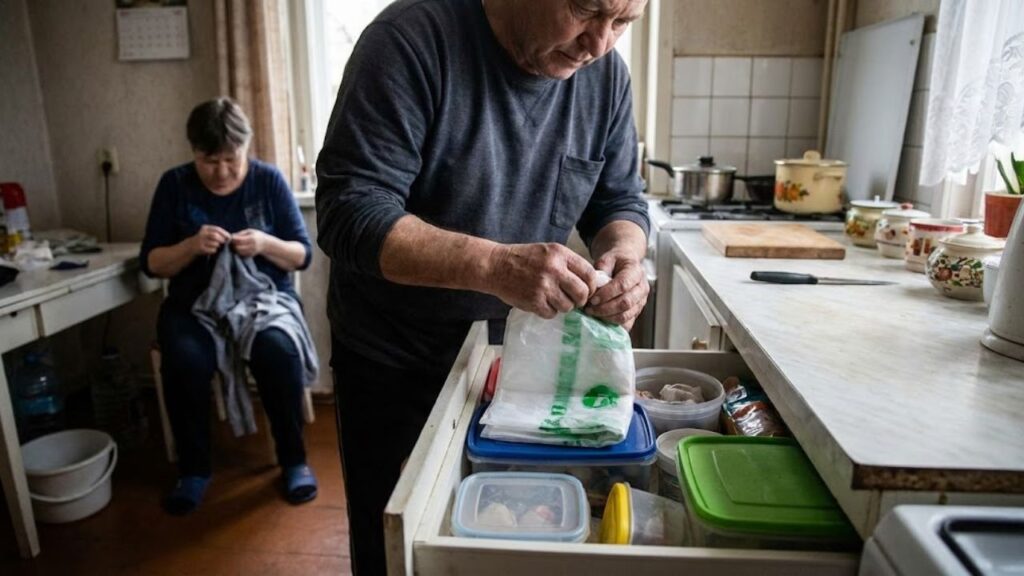
Drawers may overflow with hotel toiletries. Plastic bags live inside larger plastic bags. Clothes are saved for a future that never quite arrives. On their laptop, tabs about extra income or career changes stay open for months.
The message underneath is simple: if life takes something away again, they want a buffer. For them, excess isn’t indulgence. It’s protection.
Consider Malik, a 32-year-old engineer who always seems tired. He has a full-time role, but also delivers groceries twice a week and tutors online occasionally.
His colleagues tell him to relax. His contract is permanent. He’s fine.
What they don’t see is the memory of his father losing his job overnight when Malik was ten, the quiet kitchen arguments, the TV sold to cover rent.
That memory sits behind every extra shift. To others, it looks like ambition. To him, it’s insurance.
Psychologists often describe this as a scarcity mindset. When “enough” was never guaranteed, abundance feels temporary and fragile.
So people hold on longer than they need to, because letting go feels like standing too close to the edge.
3. They carry guilt when spending on themselves
Ask someone who grew up poor to buy something purely for enjoyment, and you can often see the inner conflict play across their face.
The payment goes through, but inside, familiar voices appear. Do you really need that? Think how many meals that could buy. People like us don’t waste money.
Even when they can afford it, guilt lands hard.
Picture Ana standing in front of a pair of shoes. They fit well, won’t break her budget, and her old pair is falling apart.
She walks away. Comes back. Texts a friend asking if it’s irresponsible.
As a child, she watched her mother wear the same coat for a decade so her children could have proper boots. Buying something for herself now feels like both freedom and betrayal.
She buys the shoes, then spends the rest of the day uneasy, waiting for consequences that never arrive.
This pattern often hides behind jokes about being “bad at treating myself”. Underneath is a belief that self-care equals selfishness.
When every coin once had to justify itself, pleasure rarely made the cut. The adult income says yes; the nervous system still says no.
4. They minimise their needs and avoid being “a burden”
Ask many people who grew up poor how they’re doing, and the reflexive answer is, “I’m fine.”
As children, they sensed the pressure around them. Bills were late, stress was constant, and money arguments filled the room.
So they learned to shrink: smaller portions, fewer requests, no complaints about worn-out shoes. As adults, this can look like avoiding raises, staying quiet in conflicts, or letting unpaid debts slide.
Imagine Leo at work. A colleague repeatedly forgets to send their share of taxi money.
Leo laughs it off. Says it’s nothing.
Inside, it hurts. Not just financially, but emotionally, echoing memories of being dismissed when he couldn’t afford school supplies.
He learned early that asking risks shame or conflict. So he swallows it.
This isn’t a general lack of confidence. It’s a learned habit of not taking up space.
They often become the reliable ones who never ask for anything back, then quietly wonder why they feel so exhausted.
5. They oscillate between strict control and impulsive spending
There’s another pattern that often stays hidden: financial whiplash.
People who grew up poor may move from intense budgeting to sudden, impulsive spending almost overnight. Weeks of restraint can end in a burst of spending on a trip, shopping spree, or night out.
This isn’t carelessness. It’s a pressure release.
Living in constant restriction is draining. Eventually, something gives.
Sara tracks every expense, compares prices, cooks at home, and avoids unnecessary costs. Then one Friday, after a difficult week, she buys concert tickets, new clothes, and drinks for friends.
For a few hours, she feels free.
By Sunday night, anxiety hits. She checks her balance and berates herself.
What’s really happening is a clash between old deprivation and new autonomy. The child who never had extras meets the adult who technically can, and they struggle to share control.
No one can live indefinitely under maximum restraint without cracking somewhere.
Living with these patterns without letting them take over
One helpful step is naming your money roles: the vigilant planner, the stash-keeper, the rebel spender.
Instead of shaming them, acknowledge them. Remind yourself that the crisis isn’t happening right now.
Another gentle approach is building small, automatic permission into your budget, such as a modest amount of guilt-free spending.
Avoid swinging from total restriction to risky splurges. Start small: one coffee out a week, a book a month, choosing one quality item over several cheap ones.
These aren’t rewards. They’re training exercises for your nervous system.
Discomfort doesn’t mean failure. It means you’re learning something you were never taught.
Growing up poor doesn’t vanish when the balance changes. It echoes in every automatic “I’m fine” and every quiet “I don’t really need that”.
- Notice recurring patterns like hoarding, guilt, overworking, or silence.
- Experiment gently with small boundaries, treats, or requests.
- Change the inner language from self-blame to understanding.
- Share your story with someone you trust.
- Seek support if money anxiety dominates your life.
What these behaviours quietly reveal
These habits aren’t random flaws. They’re records of survival.
The friend who skips holidays, the colleague who panics over a small bill, the partner who saves condiment packets are carrying memories of scarcity and stress.
For some people, a delayed card payment is a brief scare. For others, it’s the echo of an entire childhood.
There’s no single moment where the past disappears. But there can be a shift from shame to context.
Instead of asking, “What’s wrong with me?” the question becomes, “What happened that made this necessary?”
That shift creates room to change, without denying what once kept you safe.