Marine biologists are documenting a surprising pattern on the open ocean: humpback whales repeatedly inserting themselves into violent orca hunts, sometimes saving animals that are not their own. The scenes are dramatic, risky and, for now, only partly understood.
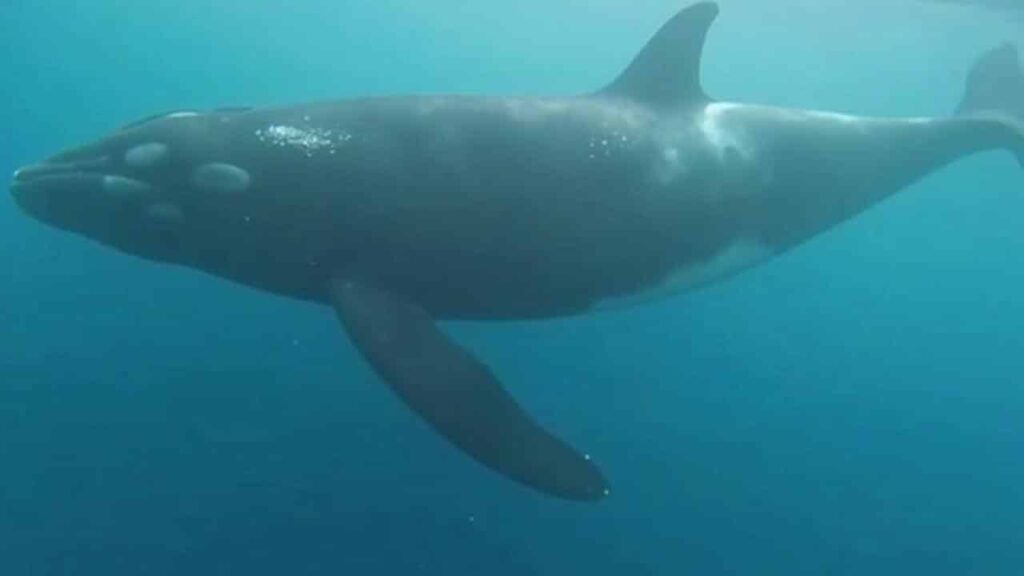
When humpback muscle stands up to orca power
Orcas sit near the top of the marine food chain. They are fast, coordinated hunters with sharp teeth and a reputation for methodical attacks. Few species challenge them directly.
Humpback whales are one of the exceptions. Adults can reach more than 15 metres in length and weigh over 30 tonnes. Their long pectoral fins, stretching up to 5 metres, act like giant underwater arms. These fins are studded with tubercles that often host barnacles, turning the edges into rough, scraping surfaces.

During clashes, researchers have seen humpbacks swing those fins and slam their tails with serious force. A well-aimed hit can injury an orca enough to make it back off. In several documented events, humpbacks placed their bodies between hunting orcas and the target animal, pushing or shoulder-barging the attackers away.
Humpbacks do not just flee; they stay, face the orcas and sometimes take the blows that were meant for another animal.
Marine Mammal Science has reported this behaviour as a kind of “mobbing”: several individuals gathering to harass a predator until it abandons the hunt. In some cases, multiple humpbacks converged on the same attack, surrounding the orcas and forcing them to break formation.
Humpbacks are not built for sprinting in open water like some sleeker whale species. They cannot easily outswim a determined orca pod. Researchers, including teams led by Robert Pitman at NOAA, suggest this might be one reason they favour a confrontational strategy. By using strength and manoeuvrability instead of flight, they turn a disadvantage into a form of defence.
Eyewitness accounts from the research field
Field biologists describe chaotic, noisy scenes. Orcas close in on a seal, a sea lion or a young whale. Then, from a distance, humpbacks change course and head straight towards the commotion.
- Humpbacks trumpeting loudly at the surface, as if sounding an alarm.
- Huge bodies rolling on their sides to shield a targeted animal.
- Tails crashing down between orcas and prey, throwing up sheets of spray.
- Orcas breaking off and regrouping further away after repeated charges.
In several cases referenced by National Geographic, the humpbacks appeared to abandon feeding on krill to focus fully on disrupting the hunt. That is a costly decision. Skipping a meal of energy-rich krill for a prolonged, physical confrontation comes with a clear metabolic price.
Ripple effects on marine ecosystems
The behaviour is not just dramatic; it may reshape local food webs. Compiled observations suggest that in about 89% of recorded interventions, the orcas were not targeting humpbacks at all. Their intended prey included seals, sea lions, dolphins and young whales of other species.
Most of the time, humpbacks are stepping into somebody else’s fight, changing the odds for animals that had little chance of escape.
Each time a hunt is disrupted, the orcas lose a potential meal and the prey animal gets another chance at survival. Over dozens or hundreds of incidents, such disruptions could begin to shift patterns of predation in a region.
If humpbacks intervene frequently in certain hotspots, several knock-on effects may follow:
| Level | Potential effect |
|---|---|
| Individual orcas | Reduced hunting success and higher energy expenditure during failed chases. |
| Orca pods | Shifts in target species or hunting grounds to avoid humpback interference. |
| Prey populations | Temporary survival boost for seals, sea lions or small cetaceans in certain areas. |
| Local ecosystem | Altered balance of predators and prey, with possible changes in competition for fish and krill. |
Biologist Alisa Schulman-Janiger, from the California Killer Whale Project, has recorded sequences where feeding humpbacks abruptly stopped lunge-feeding on krill and headed straight towards orca attacks. That kind of choice suggests that, at least sometimes, disrupting hunts ranks above immediate feeding needs.
Why would humpbacks help other species?
Scientists are cautious about projecting human motives onto wild animals, yet the pattern raises difficult questions. Why would a whale risk injury to protect a seal or a dolphin it will never meet again?
Protection of calves and an evolutionary echo
One widely discussed idea focuses on humpback calves. Orcas regularly attack young humpbacks, targeting them as relatively easy, nutrient-rich prey. Adult whales that have lost calves to orcas, or learned to fear orca calls, may react aggressively whenever they detect those sounds.
Research teams led by Schulman-Janiger and Pitman have noted that humpbacks often respond to orca hunting calls before they can possibly know what species is under attack. The reaction seems tied to the sound of a hunt itself, not the identity of the victim.

From that perspective, “helping” another species might be a side-effect: humpbacks charge towards orca attack calls as a default defence, then end up shielding whatever is in danger.
This idea fits with an evolutionary story: across generations, humpbacks that responded forcefully to orca hunts may have protected more of their own calves, passing on that tendency.
Kinship, reciprocity and something that looks like empathy
Other hypotheses remain on the table. Some scientists suspect kinship plays a role. Humpbacks often return to the same feeding and breeding grounds used by their mothers, which means relatives cluster in particular regions. Charging towards orca hunts in those areas might raise the odds of helping a cousin or grand-calf, even if the whale cannot tell exactly who is threatened.
A second idea involves reciprocity. If multiple humpbacks in a region share risk by intervening, a whale that helps today could, at least in theory, be helped later when its own calf is in danger.
Then there is the more controversial suggestion of interspecies altruism. Humpbacks are large-brained, long-lived animals with complex songs, social bonds and signs of planning. A few researchers cautiously suggest that they might experience something like concern for distressed animals, even across species lines.
The evidence is far from conclusive. Yet the repeated pattern of humpbacks apparently “choosing” to put themselves between orcas and other animals keeps this discussion alive in scientific circles.
How scientists study these clashes at sea
Documenting such behaviour is far from simple. Hunts often unfold in rough seas, in remote regions and within minutes. Researchers rely on a mix of tools and opportunistic data.
- Dedicated surveys: Research vessels track humpback and orca pods during feeding seasons, logging each encounter.
- Tour boat reports: Whale-watching crews submit photos, videos and GPS positions when they witness clashes.
- Acoustic monitoring: Underwater microphones record orca calls and humpback vocal responses.
- Drone footage: Overhead video captures movements and spacing that are hard to see from a boat.
By combining these sources, scientists can reconstruct who moved first, how many animals were involved, and whether the targeted prey escaped. Over time, patterns emerge: certain regions with frequent interventions, seasons when clashes peak, and specific orca ecotypes that seem most affected.
Key terms that help make sense of the behaviour
Two scientific concepts often come up in discussions of these events.
Mobbing: In animal behaviour, mobbing describes smaller or more vulnerable animals teaming up to harass a predator. Birds do this to owls and hawks; meerkats do it to snakes. Humpbacks appear to scale mobbing up to the level of multi-ton whales challenging apex predators.
Altruism: In biology, altruism means behaviour that carries a cost to the actor but benefits another individual. When that other individual is unrelated, the behaviour is especially puzzling for evolutionary theory. Humpbacks fending off orcas from seals or dolphins sit right on that puzzle line.
What this could mean for future oceans
If these interventions become more common, or if we simply learn to detect them more often, conservation policy might need to factor them in. Protecting humpback populations would not only preserve a charismatic species, but also maintain a kind of living buffer that sometimes disrupts orca hunts on other marine mammals.
There are also risks. As climate change shifts prey distributions, orcas may alter where and what they hunt. If that leads to more encounters with humpbacks in certain regions, conflict rates could increase. That might raise injury risks for both species and change how often young whales survive their first years.
For people watching from the deck of a small boat, these clashes are both thrilling and unsettling. A single tail strike could flip a vessel at close range, and noise or crowding can add stress to already tense encounters. Responsible whale-watching guidelines urge skippers to keep distance during predator-prey events, both for human safety and to avoid influencing which side “wins” the chase.
As new data accumulates from tags, drones and underwater microphones, scientists expect a clearer picture of how common these interventions really are and what drives them. For now, humpback whales remain some of the most unlikely bodyguards in the sea, turning their bulk and bony fins into shields in battles that, strictly speaking, are not their own.