You’ve barely sat down and already your mind feels like a browser with 27 tabs open. None of these things is a crisis on its own, yet by 11am your chest is tight and your temper is strangely short. You tell yourself it’s nothing. Just a busy day. You’ll cope.
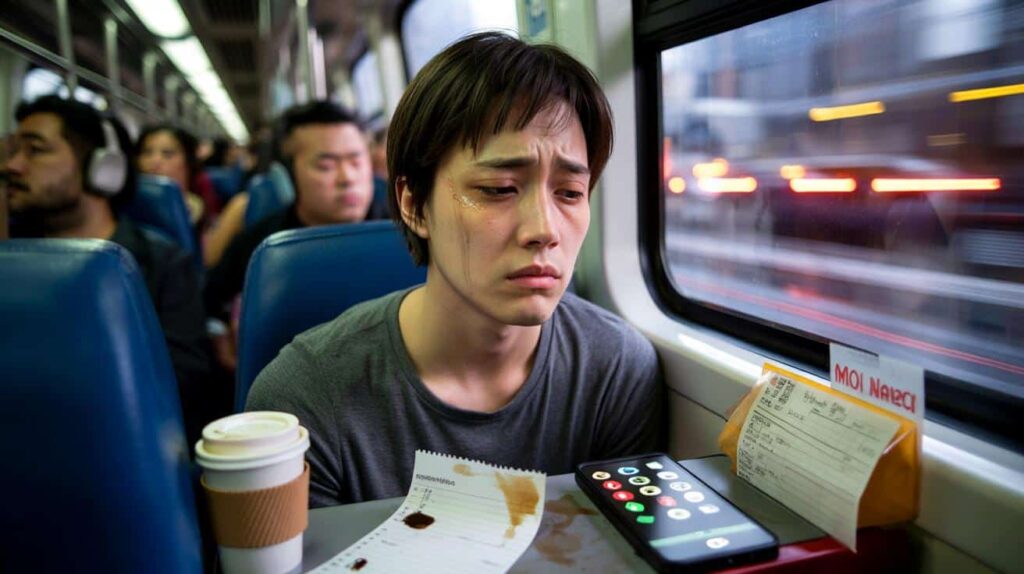
By the time you get home, a missing parcel or a blunt message in the family group chat is enough to send your mood into a tailspin. You snap at someone you love, then feel guilty and slightly confused. Why did that tiny thing sting so much? You’re not “burnt out”, you’re not in a war zone. You’re just… tired, touchy, and quietly running on fumes.
The puzzle is simple to state and hard to admit. Why do small stresses hit so hard while we keep insisting they don’t matter?

Why “small stuff” doesn’t feel small to your nervous system
Ask people how stressed they are and they tend to talk about the big-ticket items. Redundancy. Divorce. Illness. Rarely do they mention the petty arguments over dishes, the delayed train, the four separate passwords that suddenly don’t work. Those get brushed off as “just life”. Yet that’s the stuff that actually shapes your day-to-day emotional weather.
We’re taught to rank our suffering, to compare it upwards and feel grateful it’s “not worse”. That habit makes us blind to the slow drip of minor stressors. Your brain doesn’t file them in a neat folder. It stacks them, like invisible weights you keep agreeing to carry.
On a Tuesday morning in Manchester, a 32-year-old project manager I interviewed, Emma, found herself crying in the supermarket queue. Nothing dramatic had happened. The trigger was a text from her boss asking if she’d “jump on a quick call”. She read it, and her eyes filled on the spot. The woman behind her stared; Emma pretended to sneeze.
When we spoke later, she traced back her week. Three nights of bad sleep. A broken boiler. A friend cancelling on her twice. A colleague “joking” that she was slipping. Each thing felt manageable. Together, they turned a neutral message into a final straw. *She wasn’t reacting to that text; she was reacting to all of it at once.*
Researchers have a name for this: the “daily hassles” effect. Studies from the 1980s onwards, repeated many times, show that everyday annoyances predict anxiety, low mood and physical symptoms more reliably than major life events. Not because they hurt more individually, but because they are frequent, cumulative and rarely processed.
There’s also a cultural script at play. We’re encouraged to “keep things in perspective” and to reserve serious emotional responses for obvious traumas. That sounds mature, even moral. Yet it quietly trains us to dismiss our own signals. When a minor stressor lands harder than expected, we feel weak or silly, so we push the feeling away. The stress doesn’t vanish; it gets buried, ready to flare up sideways at the next tiny provocation.
How we gaslight ourselves about minor stress – and what to do differently
One simple shift changes everything: treating small stressors as legitimate data, not personal failures. Instead of asking “Why am I making a big deal out of this?”, you ask “What is this reaction trying to tell me?”. That question interrupts the automatic shame spiral and gives your nervous system a bit of respect.
A practical method is a “micro check-in”. Three times a day, you pause for 30 seconds and rate your stress from 1 to 10, then name the single most annoying thing in that moment. Not the biggest life problem. The live irritant. “Phone battery dying.” “Kids shouting.” “Slack messages nonstop.” It sounds trivial, almost childish. It’s actually a way of releasing pressure in real time.
On a bad day, most people either pretend they’re fine or declare they’re “done” and shut down. Both responses are understandable, and both keep you oblivious to the build-up. A more useful move is to catch the second or third minor stressor, not the fifteenth. You notice that your shoulders jump every time your phone lights up, or that your jaw tightens when you open the news app. That’s the moment to step away for three minutes, not soldier on for three more hours.
On a London Overground train last year, I watched a man almost explode because someone’s backpack brushed his arm. He swore under his breath, then went bright red. Within minutes he was apologising to no one in particular. “Sorry, I’m just… it’s been a day.” That apology is the giveaway: we feel ridiculous for reacting to the backpack, instead of curious about what else we’re carrying.
The logic is brutal but simple: your stress response doesn’t care about plot lines. It cares about load. Ten tiny aggravations can push your system into the same state as one recognisably awful event. When that load spikes, your emotional brain grabs the nearest available story to explain the tension. The bus driver, the email tone, the missing spoon in the kitchen drawer – anything will do.
This is why “not sweating the small stuff” backfires. Ignoring the emotional impact of minor stressors doesn’t make you stoic. It makes you less accurate about your own limits. The result is those weird, outsized reactions that feel like they’re coming from someone else living inside you.
 Emergency declared in Greenland as researchers spot orcas breaching near melting ice shelves
Practical ways to stop the quiet build-up before it breaks you
One concrete tactic: schedule a daily “decompression window” for small annoyances only. Ten to fifteen minutes, same time every day, where you mentally unload the petty rubbish. You can rant into your notes app, vent to a trusted friend, or just walk without headphones and list the stupid things that got under your skin.
It sounds almost too simple, but that’s the point. You’re signalling to your body that there is a safe slot to process low-level friction. Over time, your system learns it doesn’t have to escalate every minor stressor into a crisis just to get your attention. You start to feel less like a pressure cooker and more like a human being having a rough Tuesday.
The trap many people fall into is waiting for a full emotional meltdown before they change anything. They treat each small stress as a test of character they ought to pass. That “I should be able to handle this” script is powerful, especially if you grew up around people who had it worse or never talked about feelings at all. So you pile on, keeping score against an invisible standard.
Soyons honnêtes : personne ne fait vraiment ça tous les jours. Most of us ignore our tension until our body forces the issue with migraines, insomnia or snapping at the wrong person in a meeting. Then we feel ashamed on top of exhausted. The more compassionate route starts much earlier, at the level of the mild eye-roll or the sixth notification you didn’t want.
One therapist I spoke to put it bluntly:
“Your nervous system doesn’t distinguish between ‘worthy’ and ‘unworthy’ stress. It only knows how much is on the pile.”
That sentence sticks because it undercuts the moralising we attach to stress. You’re not weak for being rattled by a late bus after a hard week. You’re just full.
To keep that pile from toppling, build a tiny toolkit of responses that are almost embarrassingly basic. Things like:
- Two-minute box breathing when your phone won’t stop buzzing.
- Standing up and changing rooms after a jarring email.
- Texting one friend “Today is weird” instead of pretending you’re fine.
These micro-interruptions don’t solve your life. They keep minor stress from silently welding itself into your body and mood. They are the opposite of dramatic; they are maintenance.
Living with the small storms without drowning in them
Once you start paying attention, the world of “minor” stressors looks different. The broken printer is no longer a random annoyance; it’s one drop landing on a bucket already near the brim. That shift doesn’t magically fix the printer, yet it softens the self-judgement that so often doubles your suffering. You move from “What’s wrong with me?” to “No wonder I’m on edge.”
This is where the quiet power of shared stories comes in. On social media, in offices, in WhatsApp chats, there’s a growing honesty about people crying in loos, losing it over dishwasher tablets, needing ten minutes to stare out of a window before they can be civil again. On a bad day, reading that can feel like oxygen. On a good day, it’s a reminder to be gentle with the next person who overreacts in front of you.
We’re not going back to a world with fewer minor stressors. The notifications, the background dread, the hidden workloads of caring and surviving – they’re woven into modern life. The question is whether we keep pretending the small stuff bounces off us, or we start treating those tiny hits as real data about our inner life. One path leads to mysterious blow-ups and quiet despair. The other leads to something messier and more human: admitting that what looks minor from the outside can feel massive from the inside, and that both perspectives are true.
| Point clé | Détail | Intérêt pour le lecteur |
|---|---|---|
| Accumulation invisible | Les micro-stresseurs se cumulent et saturent le système nerveux sans qu’on s’en rende compte. | Comprendre pourquoi une “broutille” peut déclencher une réaction disproportionnée. |
| Validation intérieure | Reconnaître les petites tensions comme des signaux légitimes, sans se juger. | Réduire la honte et se sentir moins “faible” ou “dramatique”. |
| Rituels de décompression | Mettre en place des check-ins et fenêtres quotidiennes pour évacuer les irritations. | Prévenir l’explosion émotionnelle et retrouver un sentiment de contrôle. |
FAQ :
- Are minor stressors really as harmful as major life events?Not in isolation, but research shows that frequent daily hassles can predict anxiety, low mood and physical symptoms as strongly as big events, because they pile up quietly.
- How can I tell if “small stuff” is actually burning me out?Look for signs like constant irritability, trouble sleeping, feeling numb or overreacting to tiny triggers; that pattern often signals accumulated micro-stress rather than one big cause.
- Isn’t focusing on little annoyances just complaining?There’s a difference between ruminating and noticing; briefly naming what’s bothering you helps your brain process it instead of storing it as background tension.
- What’s one quick thing I can do during a stressful workday?Try a 30-second check-in: rate your stress from 1 to 10, name the most annoying thing right now, take five slow breaths, and adjust one tiny thing in your environment.
- How can I support someone who seems “overly sensitive” to small things?Skip the “it’s not a big deal” line and assume their bucket is already full; a simple “Makes sense you’re on edge today, want to talk or just sit?” can be surprisingly soothing.