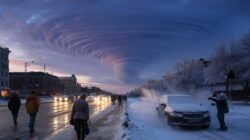
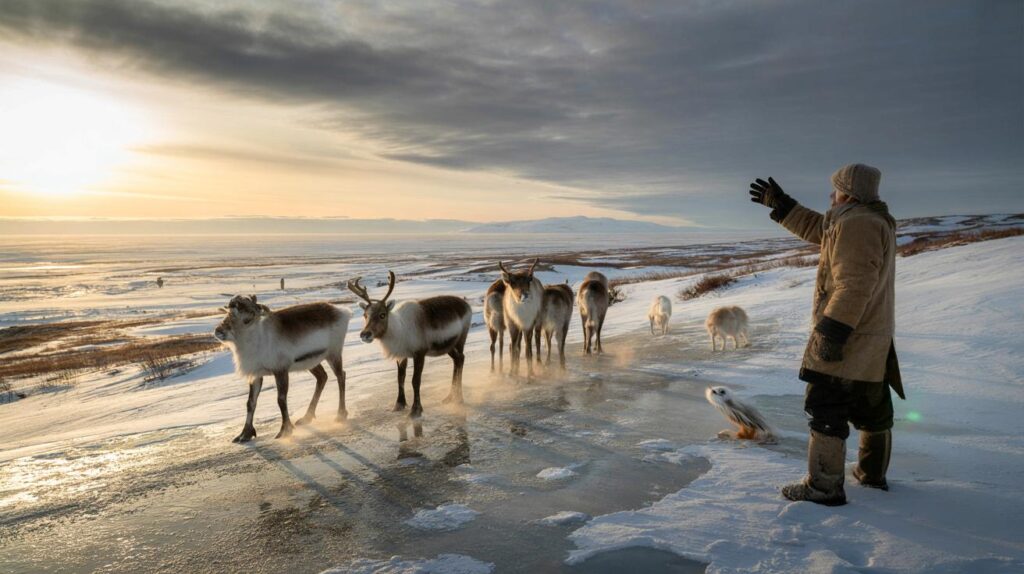
A few days before February, the air in a small Finnish village feels wrong. The snow is slushy, a wet blanket under boots that should be crunching on dry, squeaky powder. Above the treeline, reindeer hesitate on an icy slope, their hooves slipping on a glassy crust that formed overnight when a warm spell kissed the snow, then froze it solid again. A local herder, Sami, gestures at the sky, half-joking that the weather “has lost its mind.”
He’s not exaggerating much.
Meteorologists are now warning that this strange, early February Arctic shift might not just ruin ski trips. It could quietly scramble whole ecosystems already on the edge.
And the animals aren’t the ones changing fastest.
The Arctic’s February flip is arriving too soon
Across the northern hemisphere, climate scientists are tracking alarming anomalies in early February temperatures. What used to be a stable deep winter period is now showing odd pulses of warmth, followed by brutal snap-backs to cold. These aren’t gentle thaws. They’re abrupt swings driven by Arctic air lurching south and warmer air pushing north.
For wildlife, that yo-yo pattern is a nightmare.
Plants and animals that evolved for long, predictable winters are being nudged into action early, only to be slammed again by freezing winds. The Arctic used to be nature’s metronome. Now the beat is off.
On a remote island off Scotland, volunteers with a seabird monitoring group noticed puffins returning to nesting cliffs several days earlier than usual during a warm spell last February. They began courtship displays, fussed over old burrows, and wasted precious energy in what looked like the start of a new breeding season. Then the Arctic sent down another surge of cold.
Storms battered the coast. Food fish moved deeper and farther offshore. Some puffins simply vanished from the regular count.
It sounds like a small shift in a small place, yet moments like this are multiplying along the edges of the Arctic and sub-Arctic rim.

Behind these stories sits a complicated dance in the atmosphere. When the polar vortex weakens or wobbles, tongues of frigid air spill down into North America, Europe, and Asia. At the same time, hotter oceans and a warmer background climate raise the baseline temperature everywhere. So a “cold snap” for us can actually be layered on top of a winter that’s already far milder than decades ago.
Animals don’t read climate graphs. They read snowpack, daylight, and food cues. When those cues turn contradictory, timing falls apart. That timing is the thread holding fragile ecosystems together.
When animal clocks and weather stop matching
One of the clearest early casualties of a jumpy February is migration timing. Many species rely on a sequence: snowmelt, insect hatch, safe travel corridors, then breeding. When warm pulses reach into the Arctic too soon, some birds depart earlier or shift their routes, chasing a spring that hasn’t truly arrived.
On the ground, tundra plants might still be locked under ice. Insects delay. Nesting sites remain buried.
So when migrants finally land after exhausting journeys, the table isn’t set. The buffet they evolved to expect just isn’t there yet.
On Alaska’s Yukon-Kuskokwim Delta, biologists have watched this play out with shorebirds and geese. A mild February can strip snow from patches of ground, tricking birds into leaving wintering grounds sooner. They arrive to find a landscape that looks open, but hides a trap: late blasts of Arctic cold can refreeze shallow wetlands and stunt plant growth.
Parents burn through their fat reserves trying to feed chicks on scarce, low-quality food. Survival rates drop.
Multiply that stress across species and seasons, and an entire flyway starts to wobble, from South America or Africa all the way to the Arctic breeding grounds.
There’s also a quieter, less visible shift under the snow. Rodents like lemmings and voles depend on a fluffy, stable snow “roof” that keeps them insulated from extreme cold while they feed and breed. Early February warm spikes can collapse that shelter, melting and refreezing the snow into dense layers or ice. Suddenly, predators such as snowy owls, foxes, and weasels lose a big chunk of their winter food supply.
Predator populations then fluctuate wildly, triggering knock-on effects for ground-nesting birds and even vegetation. This is what scientists mean when they talk about destabilizing fragile ecosystems: the dominoes don’t fall instantly, but once they start, they rarely stop at the first row.
What we can do with this warning, right now
Faced with a giant system like the Arctic, it’s easy to feel powerless. Yet much of the response starts in small, almost unglamorous actions: data, pressure, and protection. Supporting citizen science projects that track seasonal changes is one of them. That might look like logging urban bird arrivals, uploading photos of odd ice conditions to apps, or joining local counts coordinated with global databases.
That data feeds into the models meteorologists use when they say an early February Arctic shift is coming.
Without that ground truth, the warning lights stay dimmer than they should.
We’ve all been there, that moment when you read a scary climate headline, sigh, share it once, and move on. The emotional fatigue is real, and pretending it isn’t only makes things worse. One practical step is choosing a single area to focus on: maybe Arctic wildlife, maybe oceans, maybe your own city’s green corridors. Narrowing your field makes action less abstract.
Let’s be honest: nobody really does this every single day.
Yet a few targeted actions a month — donating to a polar research fund, backing Indigenous co-managed reserves, writing to elected officials — start to stack up.

At the same time, scientists and local communities closest to the Arctic are calling for a shift in how the rest of the world listens to them.
“We are the early warning system,” says one Greenland-based researcher. “When the reindeer miss their winter routes or the sea ice breaks weeks early, it’s not just our problem. It’s your weather, your food prices, your coastlines.”
Their message is simple, and sharp.
- Support long-term Arctic monitoring programs that don’t vanish when one grant ends.
- Back stronger protections for key breeding and feeding areas stressed by shifting February weather.
- Amplify Indigenous knowledge of seasonal rhythms instead of treating it as a side note.
- Cut personal and local emissions where you actually have leverage — home energy, travel, food waste.
- Stay curious: follow meteorological updates, not just viral photos of stranded polar bears.
Living with a February that doesn’t feel like February anymore
The hardest part of this story is that the animals can’t renegotiate their contracts with winter. They’re locked into bodies and instincts tuned for a world that is slipping away faster than they can adapt. We, on the other hand, sit in heated homes, watch strange weather roll across our screens, and decide whether to treat it as background noise or as the signal it really is.
This early February Arctic shift is exactly that kind of signal. A flashing, uncomfortable one.
*If February loses its shape in the Arctic, seasons everywhere start to blur.*
Plants bloom at the wrong time. Insects emerge too early or too late. Predators hunt in landscapes that no longer match their inherited maps. The fragile ecosystems stretched across the top of the planet are not faraway curiosities. They’re anchoring points for the jet stream, ocean currents, and food webs that spill into your own kitchen.
Ignoring that link doesn’t make it less real. It just leaves us late to the story.
So when meteorologists warn that another odd February is on the way, it isn’t just small talk about the weather. It’s an invitation to see the world as a living system that reacts, sometimes violently, when its patterns are pushed too hard. **Paying attention** is not a luxury, and neither is **taking small, repeated actions** where we can. The Arctic may seem distant, but its breath is already on your windowpane.
The question is whether we’re ready to feel it — and respond before the fragile balance tips too far.
| Key point | Detail | Value for the reader |
|---|---|---|
| Early February shifts | Arctic air and warm pulses are disrupting what used to be a stable mid-winter period. | Helps you understand why weather feels “off” and what that means beyond your doorstep. |
| Ecosystem timing | Migrations, breeding, and food availability are falling out of sync as seasons blur. | Shows how invisible changes can ripple into food webs, economies, and daily life. |
| Action pathways | Citizen science, policy pressure, and support for Arctic research and communities. | Gives concrete ways to move from anxiety to meaningful, realistic engagement. |
FAQ:
- Is this early February Arctic shift a one-off event?Most scientists say no. While any single year can be unusual, the pattern of warmer winters punctuated by sharp cold snaps has been strengthening over the last few decades.
- Which animals are most at risk from these shifts?Species tightly linked to snow cover and precise timing — like lemmings, reindeer, seabirds, and some migratory songbirds — are especially vulnerable.
- Does this mean we’ll see more extreme winter storms?There’s growing evidence that a disrupted polar vortex and warmer background climate can fuel both sudden freezes and heavy snow events in mid-latitudes.
- How does this affect people outside Arctic regions?Changes in Arctic temperature and ice cover can alter the jet stream, crop yields, fisheries, and even energy demand and pricing in faraway countries.
- What can an ordinary person realistically do about this?Focus on two tracks: support systemic action (policy, research, protected areas) and cut your own footprint where you have control, from home energy and flying less to backing trusted climate initiatives.