Inside, your hands, toes and nose insist the story is different.
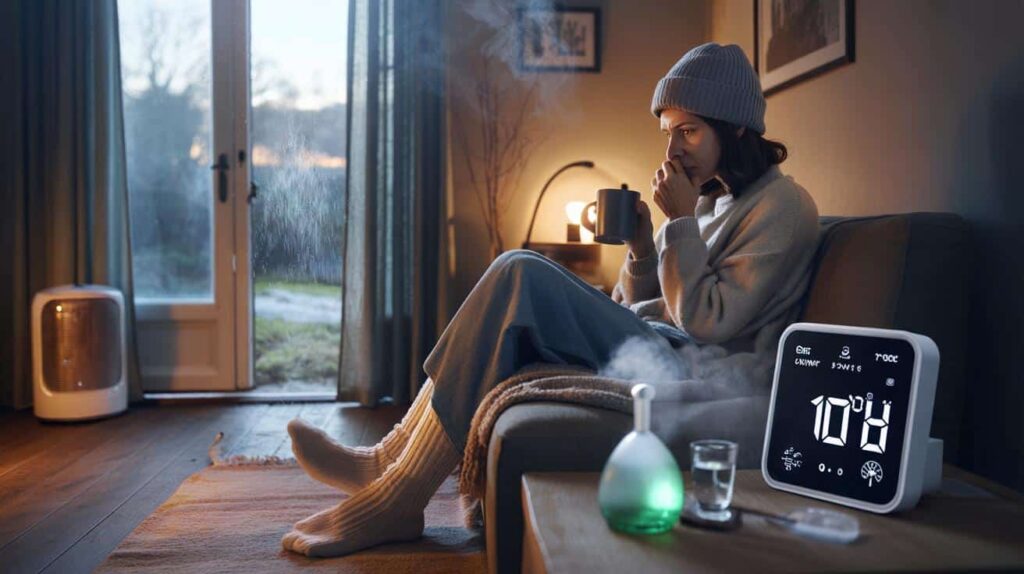
Many households keep their heating at 19–20°C, as advised by energy agencies. Yet countless people still feel chilly on the sofa. The number on the thermostat, it turns out, is only a small part of how warm you actually feel.
Why you feel cold even at 19–20°c
The thermostat lies, at least a little
The figure on the wall is an air temperature, not a comfort guarantee. Human bodies respond to a mix of air, surfaces, movement and moisture.

Your “real” temperature is a blend of air warmth, humidity, surface temperatures and drafts, not just the setting on the boiler.
Four factors quietly shape your sensation of cold:
- Humidity – Dry air below roughly 40% humidity can make 20°C feel sharper and more irritating to skin and airways.
- Drafts – Tiny air leaks around windows, doors and floorboards can cool you far more than a one-degree change on the thermostat.
- Cold surfaces – Chilly walls, floors and windows “steal” heat from your body through radiant exchange.
- Activity level – Sitting at a desk or on a sofa for hours means your muscles produce little heat.
The science of feeling cold
Your body constantly balances heat production and heat loss. Muscles, digestion and even brain activity create warmth. At the same time, you lose heat through your skin, breathing and any surface you touch.
When you sit close to a cold window or an uninsulated wall, your body radiates heat towards that cooler surface. You may not feel a breeze, but you still sense a chill. This is why two rooms at 19°C can feel completely different: one with thick curtains and rugs can feel cosy, the other bare and echoey feels raw.
Not everyone feels 19°c the same way
Comfort is highly personal. Age, body composition, hormones and health conditions all shape how warm you feel.
| Profile | Typical reaction at 19–20°C |
|---|---|
| Older adults | Often feel cold, especially in hands and feet, due to slower circulation. |
| Children | Can fluctuate quickly between too hot and too cold; tend to move more. |
| Desk workers | More likely to feel chilly after long, still periods. |
| Active adults | Often comfortable at 19°C when moving, colder when watching TV. |
Diet plays a role as well. Eating little, skipping meals or following very low-calorie plans can leave you with less “fuel” for internal heat.
What you should do before raising the thermostat
Get the humidity right
A cheap digital meter, called a hygrometer, can change the way you manage warmth at home. It tells you how much moisture is in the air.
Aim for roughly 40–60% indoor humidity. Around 50% is often the sweet spot for comfort, health and heating efficiency.
If the air is too dry, you can:
- Use a plug-in humidifier in the main living area.
- Place bowls of water near radiators to add gentle moisture.
- Dry laundry indoors in moderation, while still ventilating to avoid mould.
If humidity is too high, condensation on windows and a clammy chill can appear. In that case, briefly open windows each day, use extractor fans and, in stubborn cases, run a dehumidifier.
Block the hidden drafts
Air leaks can make your ankles feel like they live in a different climate to your head. Small, cheap fixes help more than you might expect.
- Place draft stoppers or rolled towels at the bottom of doors.
- Seal gaps around window frames with adhesive foam strips.
- Check letterboxes and keyholes; fit covers or brushes where possible.
Once drafts are under control, the same 19°C setting often feels noticeably warmer.
Warm up cold floors and walls
Hard floors conduct heat away from your body. Even if the air is warm enough, stepping on a cold surface makes you shiver.
- Add thick rugs, especially near the sofa, bed and children’s play areas.
- Use lined or thermal curtains that cover the full height of the window.
- Move beds and sofas a few centimetres away from external walls.
Reducing your exposure to cold surfaces can make 19°C feel like 21°C without touching the boiler controls.
Spread the heat, don’t just make more
In some homes one side of the room bakes while the other half stays chilly. This is often a circulation problem, not a lack of heat.

A small, quiet fan set on low speed can push warm air into dead corners. Ceiling fans on winter setting can also move rising heat back down towards people instead of letting it pool near the ceiling.
Dress like you mean it
Indoors, people often dress for autumn while expecting the comfort of late spring. Layering matters.
- Wear a base layer made of cotton or technical fabric that wicks moisture.
- Add a jumper with wool or fleece, which traps warm air.
- Cover your feet with thick socks or slippers; feet lose heat quickly.
Oddly, a light hat or beanie indoors on very cold days can change your comfort level more than another degree on the thermostat, especially if you’re sitting still.
Keep your body generating heat
Spending hours barely moving in front of a laptop slows circulation. Short, regular movement breaks can help.
Every hour or so, stand up for two or three minutes. Walk around, climb the stairs once, stretch your arms and legs. That small burst of muscular activity sends warm blood back to your extremities.
When raising the thermostat makes sense
Energy advisers often quote 19–20°C as a good target, especially for living rooms. Yet that figure is not a law. After dealing with drafts, humidity and clothing, you might still feel cold, particularly if you are older, unwell or underweight.
A one-degree increase can be justified if you have optimised the home and still feel uncomfortable, especially for health reasons.
The catch: each extra degree is often linked with a noticeable jump in energy use. Many national energy agencies estimate that going from 19°C to 21°C can raise heating consumption by around 10 to 15 percent, depending on the property.
Why your house itself might be the problem
Insulation and glazing matter more than you think
Two homes at the same thermostat setting can feel worlds apart. The difference often lies in insulation, windows and building materials.
- Older single-glazed windows radiate cold and lose heat quickly.
- Uninsulated lofts or roofs let warm air escape, making the home feel drafty even with closed windows.
- Thin external walls cool down rapidly overnight, lowering surface temperatures inside.
Upgrading insulation is a bigger investment but has cumulative effects: better comfort, lower bills and a more stable indoor climate in both winter and summer.
Zones and realistic expectations
Not all rooms need to feel the same. A living room at 19–20°C can coexist with slightly cooler bedrooms. Some people sleep better in a room closer to 17–18°C, with a good duvet taking over where the radiator stops.
Thinking in zones also helps manage costs. You can focus improvements—like draught-proofing and rugs—on the rooms where you actually spend time.
Extra tips and useful terms
What “thermal comfort” really means
Engineers use the term “thermal comfort” to describe a state in which most people in a room feel neither too hot nor too cold. It depends on:
- Air temperature
- Average surface temperature around you
- Air movement (like drafts or fans)
- Humidity level
- Your clothing
- Your activity level
Once you see comfort as this mix, the thermostat stops being a magic button and becomes just one tool among several.
A simple home scenario
Imagine a flat kept at 20°C. The owner sits at a desk by a large window with no curtain, on a bare wooden floor. Humidity is 30%, there is a faint draft under the door, and they are wearing thin socks.
Without changing the thermostat, they add a rug, close the gap under the door with a draft stopper, hang lined curtains and put on thicker socks. They also get up for a quick walk every hour. The air temperature is the same, but the room feels far less harsh. The feeling of cold eases not through higher energy use, but through smarter use of the heat already there.