Across Europe and North America, gardeners dread that first hard frost: drooping leaves, blackened stems, and young plants wiped out overnight. Long before weather apps and smart greenhouses, older generations had a tiny, almost laughably simple ally against the cold: the ordinary clothes peg.
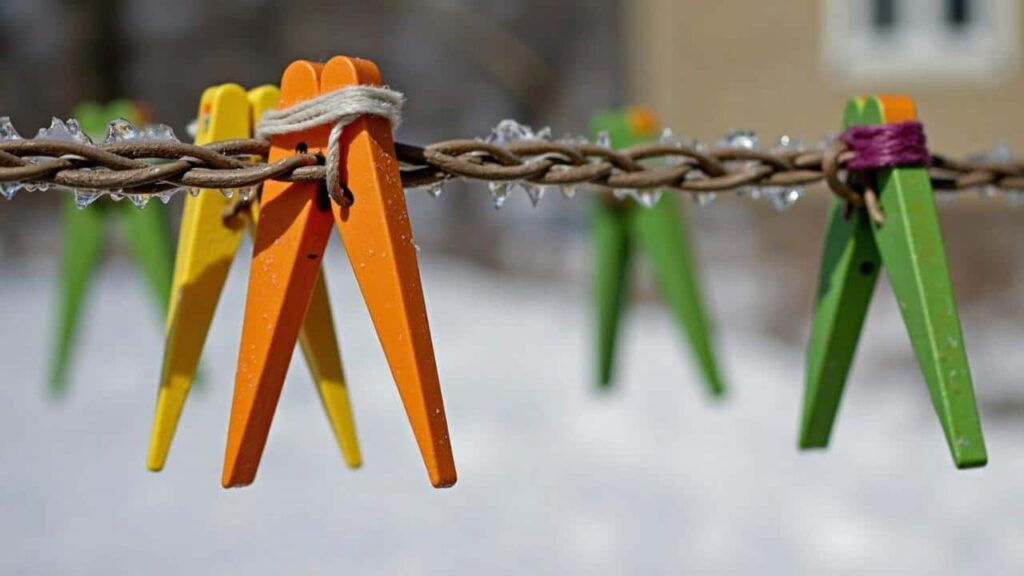
When frost turns a peaceful garden into a danger zone
Once temperatures drop below freezing, the moisture on leaves and in the soil crystallises. Those glittering ice crystals may look pretty under a streetlamp, but they cause very real damage.
Plant cells are mostly water. When that water freezes, it expands and can rupture cell walls. The result is soft, limp foliage that never really recovers, even if the plant survives.

Frost damage does not only kill plants; it slows them for months, costing you flowers, fruit and harvests well into spring.
Common winter protection mistakes in home gardens
Many gardeners do try to protect their beds and pots. The problem usually lies less in the material than in the way it is fixed in place.
Old sheets, plastic covers, cardboard boxes – all of these can help briefly, but they often blow away in the night or leave gaps where freezing air funnels in.
- Loose covers flap and rub against stems, snapping the most fragile ones.
- Plastic tarps trap humidity and can “cook” plants during a sunny morning thaw.
- Stones or bricks placed on the edges often leave small openings where cold air concentrates.
One gust of wind and your careful protection is gone, just when the temperature hits its lowest point before dawn.
Why fixing the cover properly matters more than the fabric itself
Garden centres sell specialised fleece and winter fabric, and these can be very helpful. But even the best material fails if it is badly secured.
The tightness and stability of the cover often decide whether a plant survives a -3°C night or not.
If the bottom edge lifts, freezing air runs under like a blade. If the fabric sags with dew or wet snow, it rests on delicate buds and shoots, scalding them where they touch when ice forms.
The surprising hero: how a clothes peg becomes a winter tool
The everyday object that turns into anti-frost gear
This is where the old-timers’ trick appears. Instead of complex clips or metal clamps, they reached for something every household already had: clothes pegs.
Pinning winter fleece or a light fabric to stakes, pots, wires or branches with simple pegs creates a tighter, more stable shelter. The pressure is gentle, so stems are not crushed, but the cover stays exactly where it should.
A handful of clothes pegs can do more for winter protection than an expensive cover used badly.
Why pegs work so well in freezing weather
Clothes pegs offer a few quiet advantages when the temperature drops:
- They are quick to use, even with cold fingers or gloves on.
- They grip fabrics without tearing them, which matters with thin winter fleece.
- They adapt to many supports: bamboo canes, balcony rails, mesh, fruit tree branches.
- They are reusable from year to year, so you reduce waste and costs.
Unlike stones or heavy objects, pegs secure the fabric exactly where you need tension. You can shape your protection like a small tent or cloche, keeping it off the foliage while closing off icy drafts at the base.
What kind of covers can you hold with pegs?
Most porous, breathable materials can be held firmly with standard wooden or plastic pegs. That includes:
- Winter fleece or horticultural fabric
- Burlap or jute
- Old cotton sheets
- Light woollen blankets
Plastic sheeting is less ideal because it traps condensation and can suffocate plants, but if you do use it, pegs still help to keep it slightly raised and vented.
How to set up a proper anti-frost barrier
Matching the protection to the type of plant
Different plants need different levels of protection. A salad bed in a raised planter will not face the same risks as a young citrus tree in a tub.
| Plant type | Recommended cover | Peg usage |
|---|---|---|
| Winter lettuce, spinach, seedlings | Light winter fleece over small hoops | Peg the fleece to the hoops and to the planter edge |
| Roses, young shrubs | Thicker fabric or double fleece | Peg the cover around canes, leaving room for air |
| Citrus in pots, tender exotics | Double fleece plus bubble wrap around the pot | Peg the fleece at the top and base, avoid compressing leaves |
The key is to create a still pocket of air around the plant. The fabric stops wind; the air pocket insulates, much like a duvet.
Where to place the pegs for maximum effect
Strategic placement makes each peg count. Aim to:
- Fix fabric on the windward side first, where gusts are strongest.
- Secure the cover to stakes or canes just above plant height, keeping it off the foliage.
- Add extra pegs along the base to seal gaps where cold air might sneak under.
Think of your cover as a tent around the plant, not a sheet laid on top of it.

On larger beds, more fixing points spread the tension and prevent big “sails” that catch the wind. For balcony boxes, simply pegging fleece to the rail and to the back of the box often gives enough shelter for herbs and winter greens.
Mistakes that quietly ruin your hard work
Several errors come back year after year in home gardens:
- Using too few pegs, so the cover balloons or lifts overnight.
- Choosing brittle pegs that snap in the cold or under light snow.
- Wrapping fabric so tightly that it squashes buds and reduces airflow.
- Leaving the base open on the side where the main wind arrives.
Cover right down to the soil and overlap edges if you are protecting a bed. For pots, anchor the fabric under the rim with pegs or soft ties, then gather and peg the top loosely above the foliage.
What changes once you start using pegs properly
From ruined seedlings to healthy spring growth
Gardeners who begin fixing their covers with pegs often notice a clear contrast between protected and unprotected areas. Tender nasturtiums, young radishes or early peas behind a stable fleece come through a frosty week looking almost untouched. A few metres away, unprotected plants collapse and rot.
Winter protection is not just about surviving the night; it shapes how strong and productive your plants are for the rest of the year.
Perennials like dahlias, strawberries or young fruit trees show fewer brown scars in spring. They put their energy into new growth and flowering instead of repairing cold damage.
Healthier plants, fewer diseases
Frost stress weakens natural plant defences. Damaged tissues invite fungi and bacteria, especially during damp late winters. By reducing exposure to repeated freezing and thawing, you lower the risk of rot and canker on stems and roots.
Plants that keep more of their foliage intact also photosynthesise sooner when light levels rise, so they recover faster once days lengthen.
Getting ready: timing, gear and a few extra tricks
Watching the calendar and the forecast
The first serious frost often arrives earlier than people expect. In many regions, that risk starts from late October, while in milder cities it may hit closer to December.
A simple habit helps: when night temperatures in the forecast fall near 2–3°C, prepare your covers and pegs by the back door or in the shed. That way you can throw them over vulnerable plants in a couple of minutes before bed.
What to keep on hand before winter
You do not need specialist gear to try this method. A basic kit looks like this:
- Several pieces of winter fleece or light fabric cut to bed or pot size
- 20–40 sturdy clothes pegs (wood or frost-resistant plastic)
- A few bamboo canes, hoops or old metal rods to hold fabric above the plants
- Optional: bubble wrap for pots, straw or leaves for mulching soil
Old pegs that have lost their spring can sometimes be repurposed with elastic bands or soft wire. Some gardeners even craft larger clips out of bent coat hangers for bigger branches.
Extra context: frost, microclimates and simple scenarios
Understanding ground frost and cold pockets
Frost does not hit every part of a garden equally. Cold air is heavier than warm air and tends to slide down towards the lowest point. That is why lawns at the bottom of a slope often freeze while terraces stay clear.
If you know your garden’s “cold pockets”, you can focus your pegs and covers there first. Raised beds, balcony planters and pots on stands usually fare slightly better because they are away from the coldest air layer at ground level, though their roots can still freeze faster due to exposed sides.
Two realistic winter-night scenarios
Picture two identical citrus trees in tubs on a patio. One is wrapped loosely in fleece, held in place with four pegs around the rim and two near the top. The other has the same fleece, but it is just draped over, with a brick on one corner.
A windy, -4°C night arrives. By morning, the draped fleece has blown halfway off, leaving one side exposed. That side shows blackened leaves and a split twig within days. The pegged tree keeps its full cover and goes on to flower in early spring.
Now think about a small urban balcony herb garden. Without protection, mint, parsley and young lettuce plants turn limp after repeated frosts. With a single sheet of fleece pegged along the balcony rail and secured at the back of the planters, the same herbs stay harvestable throughout a mild winter, though growth slows.
These small differences accumulate over a season. A few minutes with clothes pegs on a cold evening can mean a garden that wakes in spring already full of life, rather than one starting again from scratch.