On a freezing January morning, the kind where the cold bites through your coat before the door even closes, a woman in a faded red bathrobe steps onto her back deck.
She cradles a plastic tub of sunflower seeds, breath puffing in small gray clouds, and tips it into a hanging feeder dusted with frost.
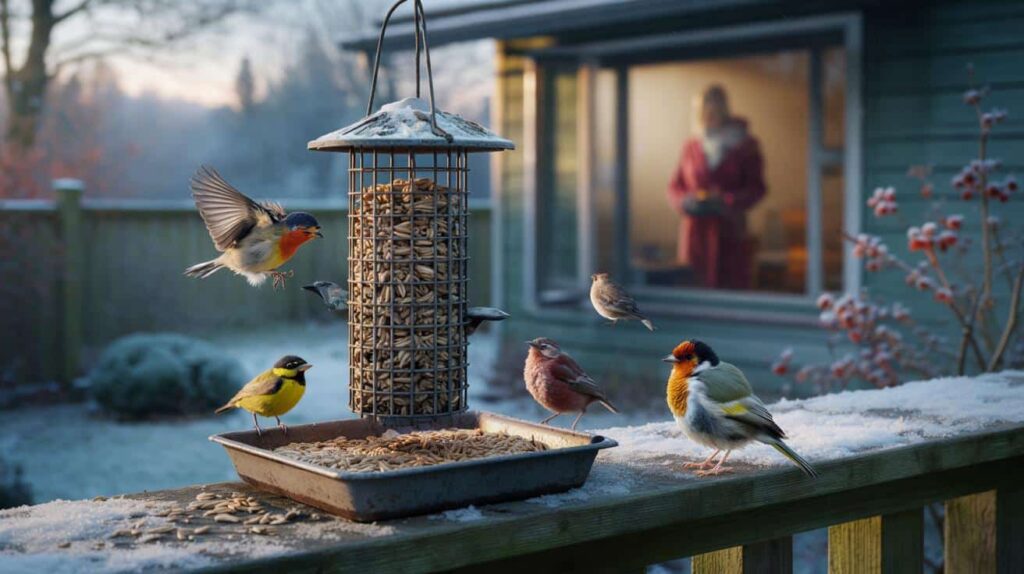
Within seconds, a robin lands on the railing, then a finch, then a blur of sparrows.
They bounce and flutter, tiny bodies burning precious calories just to stay alive in the icy air, and the scene feels almost sacred.
She smiles, believing she’s helping them through the harsh months.
What she doesn’t see is the crust of old seed clumped at the bottom, the smear of droppings along the perch, the slightly fluffed-up robin that’s not moving quite right.

Something here is quietly going wrong.
When a cozy feeder turns into a disease hotspot
Stand by a busy backyard feeder for five minutes and you can feel the energy buzzing off it.
Robins hop below, finches cling to the plastic window, doves lumber in with awkward authority.
From the kitchen window, it reads like a happy winter buffet.
But for the birds, this crowded little diner can act more like a waiting room in flu season.
One sick bird arrives, lands, eats, wipes its beak on the perch.
Another follows, touches the same spot, and carries away something you never intended to give: infection.
In parts of North America and the UK, wildlife rehab centers are quietly keeping track of winter phone calls.
They see the same pattern year after year: people report robins and finches with swollen eyes, puffed-up feathers, odd breathing, birds that don’t fly off when you open the door.
Often, those calls cluster around neighborhoods where feeders are everywhere.
Not because feeders are evil, but because many act like little disease amplifiers in the cold months.
One biologist described a popular suburban park to me this way: “The robins were lining up like they were at a soup kitchen… and passing the same dirty bowl around.”
The science isn’t mysterious.
Birds carry bacteria, fungi and viruses in their droppings and saliva, and winter concentrates them into smaller areas with fewer natural food sources.
At a feeder, dozens of birds press their faces, feet and beaks against the same bars, ports and trays.
Moisture from snow and freezing rain mixes with seed husks and droppings, creating a perfect sticky sludge where pathogens survive longer.
Among the worst offenders for songbirds are salmonella, trichomoniasis and mycoplasmal conjunctivitis.
For a robin or finch running on the thin edge of its energy reserves, one bout of sickness can mean a slow, quiet death in a hedge 20 meters from your cheerful kitchen window.
How to feed birds without quietly killing them
If you’re going to feed, feed like it matters.
The single most protective gesture for winter birds is simple: treat your feeder like a kitchen utensil, not a garden ornament.
Every week or two in cold weather, take feeders down and scrub them.
Hot, soapy water, a dedicated brush, and then a rinse in a weak bleach solution (about one part bleach to nine parts water) can dramatically cut down the invisible stuff that spreads between beaks.
Let them dry completely before refilling.
Yes, the yard will look strangely empty for a day, and the silence will feel wrong, but the birds will circle back.
A lot of us fall into the same trap: we put up more feeders, buy fancier seed mixes, but rarely touch the awkward, slightly gross task of cleaning.
Let’s be honest: nobody really does this every single day.

Birds, though, don’t read the packaging on the “premium” seed bag.
They feel only the crowded perch, the weak immune system, the shared spit on the plastic port.
You can ease the pressure by spreading the buffet out.
Use multiple small feeders instead of one massive hub, and place them a few meters apart so one sick bird doesn’t interact with every other visitor in 10 minutes.
And go easy on cheap mixed seed with lots of filler grains that end up on the ground, fermenting into a bacterial soup under the snow.
We’ve all been there, that moment when you notice a fluffed-up finch sitting too still on the feeder, and a tiny part of you wonders if your “kindness” has a darker side.
- Rotate “no-feeder” days
Give the area a 24–48 hour rest occasionally so droppings dry out and birds redistribute to more natural food. - Prioritize hygiene over variety
One well-maintained feeder with quality seed beats three dirty ones loaded with every blend in the store. - Rake or shovel under feeders
Discard old, wet seed and husks that can harbor mold and bacteria, especially after snowmelt or rain. - Watch for warning signs
Birds with crusty or swollen eyes, staying fluffed and still, or sitting on the ground when others fly are red flags. - Be ready to pause feeding
If you see sick birds, take feeders down for at least a week and clean thoroughly before rehanging.
*The plain truth: backyard feeding helps only if we treat it as a responsibility, not just a feel-good winter ritual.*
Rethinking what “helping wildlife” really looks like
Once you’ve seen a sick bird up close, the feeder doesn’t feel quite as innocent.
The seed is the same, the snow is the same, but the story you’re part of has shifted.
You start to notice the details: which birds hog the tray, which arrive later and hang back, which spots stay damp and grimy no matter what.
Maybe you find yourself putting up a small brush by the back door, or cutting old feeders from your collection because they’re just too hard to clean.
And something else can change too.
You might plant berry bushes that carry robins through winter storms.
You might leave a messy corner of the yard, rich with dead stems and hidden seeds, so the finches have a backup plan when your feeder is offline.
There’s a deeper question humming under all of this, one that doesn’t fit neatly on a seed bag label.
Are we feeding birds because they need it, or because we need them at arm’s length, framed in our window glass?
When we step back from constant feeding, birds don’t vanish from the landscape.
They spread out, rediscover hedges, park edges, patches of urban scrub that still hide insects and seeds.
Your role shifts from “provider” to quiet collaborator.
You’re not just filling a tube; you’re shaping a safer little ecosystem in your street, one small decision at a time.
That shift can feel uneasy.
It means sometimes saying no to that urge to refill a dirty feeder “just this once”, because the robin looks so hungry.
It means talking to neighbors who are also feeding and gently suggesting a cleaning day, a pause if sick birds show up, or a switch from sprawling mixed piles on the ground to smarter, less crowded setups.
You don’t have to become a perfect backyard biologist.
But you can become the person on your block who feeds birds with eyes wide open, not just a kind heart.
The next time you see that flurry of wings at your window, you’ll know the scene is closer to what it looks like: beautiful, fragile, and shaped by the quiet choices we make in the cold months.
| Key point | Detail | Value for the reader |
|---|---|---|
| Hidden disease risk | Dirty, crowded feeders spread salmonella, trichomoniasis and other infections among robins and finches. | Helps you understand why “helping” can sometimes harm and what signs to watch for. |
| Hygiene over volume | Regular scrubbing, drying, and rotating rest days reduces invisible pathogen build-up in winter. | Gives you a clear, doable routine to protect birds without giving up feeding entirely. |
| Beyond the feeder | Native plants, ground cover and yard “messiness” provide natural food and reduce feeder dependence. | Shows how to turn your whole yard into a safer, more resilient refuge for winter birds. |
FAQ:
- Question 1Are backyard bird feeders always bad for robins and finches in winter?
No. They can genuinely help birds through cold snaps, especially in harsh urban landscapes. The trouble starts when feeders are rarely cleaned, overloaded, or so crowded that one sick bird can infect many others. Think “well-run café” rather than “overstuffed, never-cleaned buffet.”- Question 2How often should I clean my bird feeders in cold weather?
Aim for a proper clean every 1–2 weeks in winter, and sooner if you see a lot of droppings, clumped seed, or signs of sick birds. Use hot, soapy water, scrub well, then rinse with a mild bleach solution and let everything dry fully before refilling.- Question 3What are the signs that birds at my feeder might be sick?
Watch for birds that look overly fluffed for long periods, have swollen or crusty eyes, seem unsteady, breathe with effort, or stay on the ground while others fly easily. If you notice more than one bird like this, it’s time to take feeders down and clean deeply.- Question 4Should I stop feeding birds altogether if I live in a mild climate?
Not necessarily, but you can dial it back and focus more on habitat. Plant native berry bushes, leave seed heads on flowers, and let some leaf litter stay. That way, birds are less dependent on your feeder and less likely to crowd into one risky spot.- Question 5What type of food is safest for robins and finches in winter?
Quality, species-appropriate food is key. Finches thrive on fresh sunflower hearts and nyjer seed, while robins often prefer suet, mealworms and berries over dry seed. Avoid cheap mixes packed with filler grains that birds toss to the ground, where they rot and fuel disease.