On a damp Saturday in late spring, the kind where the sky can’t decide between drizzle and sunshine, I watched my neighbor toss three faded tennis balls into her flowerbed. She wasn’t playing fetch with a dog. She was “saving hedgehogs,” she said, pushing the balls deep into the newly opened drainage pipe by the hedge.
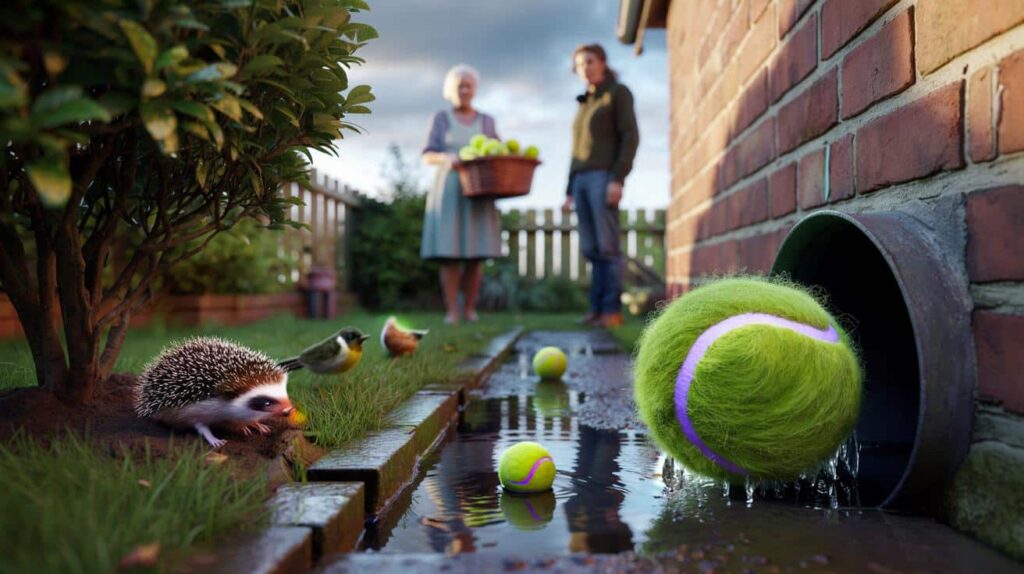
Two gardens down, a man in a navy fleece leaned over his fence and shook his head. “Cruel nonsense,” he muttered. “Next they’ll say we should bubble-wrap the lawn.”
Within a week, our small street had split into two camps: the wildlife protectors with buckets of old tennis balls, and the eye-rolling neighbors who called it all a ridiculous fad.

Somewhere between them, under the wet leaves and quiet shrubs, birds and hedgehogs went on with their fragile lives.
The strange rise of the “tennis ball garden” and why people are furious
The scandal started, as many modern garden wars do, with a single viral post. A wildlife rehabber shared a blurry photo of a hedgehog rescued from a steep garden pond, with two neon tennis balls bobbing next to a makeshift ramp. Within days, the internet was full of reels and before/after photos: tennis balls stuffed into gutter openings, wedged into netting, floating in water butts as bright, bobbing lifebuoys.
Some experts applauded the idea as a cheap, clever way to cut down on tragic accidents. Others, especially traditional gardeners, saw it as a kind of eco-theater. Plastic, garish, and “pointless”, as one furious commenter wrote under a picture of a carefully mulched rose bed dotted with lime-green balls.
In one sleepy English village, things went from online grumbling to real-world drama. A retired teacher, proud of her “certified wildlife garden,” began placing old tennis balls along the narrow gaps at the base of her fence. She’d read that small birds and hedgehogs were getting trapped in those squeezes and in exposed drains, and the balls could block deadly holes without needing major work.
Her next-door neighbor, who prized his pristine lawn like a putting green, was not amused. He accused her of “littering” and complained that the fluorescent balls ruined the look of the street. Voices were raised over the clatter of teacups. Someone snapped a photo and posted it to a local Facebook group. Within hours, hundreds of comments stacked up: some cheering the “simple hack to save wildlife,” others calling it “cruel, pointless, and ugly.”
So what’s really going on with these fuzzy green hand grenades at the heart of the garden world’s latest feud? At its core, the tennis ball trick responds to a very real problem: modern gardens are full of traps. Open drainpipes, steep-sided ponds, harsh netting, narrow gaps below sheds or fences — all perfect death funnels for small creatures that fall in and can’t climb out.
Wildlife centers across Europe and the UK quietly report the same pattern: hedgehogs drowning in garden ponds, birds tangled in sports netting, frogs stuck in open drains. The tennis ball is just a symbolic tip of the iceberg. It’s cheap, visible, easy to move. And it makes people feel like they’re doing something. *That feeling is powerful – and that’s exactly what some critics can’t stand.*
How tennis balls are really used to help wildlife (and how to avoid doing it wrong)
When used sensibly, a tennis ball is less “magic solution” and more handy plug, float, or buffer. Wildlife-conscious gardeners slide them into the mouths of unused drainpipes, downspouts, or exposed holes where animals might crawl in and become trapped. The soft, springy texture blocks the gap without creating sharp edges.
Around ponds or water troughs, some people let the balls float on the surface. They act as visual markers and tiny rafts in calm water, reducing the chance that an exhausted bird or hedgehog drowns unseen in a dark corner. Others thread a cord through a ball and tie it to flimsy netting, so the moving weight keeps the mesh from collapsing into a tight, strangling trap. It’s low-tech, homemade, a bit scruffy — and that’s partly why it spreads so easily.

The trouble begins when a simple idea turns into a viral challenge. People throw tennis balls all over their garden without thinking about the species in their area, the layout of their land, or the long-term impact of leaving synthetic material outside. Some hedgehog rescues have gently pointed out that random balls on the lawn don’t do much except get slimy and moldy. Birds can peck at the fuzzy coating. Dogs chew them and swallow bits. The initial good intention gets lost in the chaos.
We’ve all been there, that moment when you see a “one quick trick” on social media and suddenly feel guilty for not doing it too. Let’s be honest: nobody really does this every single day. Wildlife work is usually slower and more boring — checking a fence line, lifting a heavy slab to add an escape gap, altering pond edges with bricks instead of just tossing in a ball.
One conservation advisor I spoke to put it bluntly.
“**The tennis ball isn’t the hero — it’s the conversation starter**,” she said. “If a few ugly green balls get people to look at that lethal drain or that vertical pond liner, I’ll take the win. But don’t stop at the ball. Fix the structure. Think long term.”
From these debates, a simple “tennis ball checklist” is slowly emerging among patient, practical gardeners:
- Use balls only where they clearly block a hole, soften netting, or mark water danger, not as random decoration.
- Check them regularly for mold, damage, or animals chewing the surface.
- Prefer repurposed balls you already have, not new plastic bought just for show.
- Combine them with real changes: wildlife ramps, escape steps, hedgehog highways.
- Talk to neighbors before filling shared views or fences with fluorescent clutter.
Each of these small moves shifts the whole debate from “Are tennis balls cruel?” to a quieter, more useful question: “What in my garden could quietly kill something, and how can I soften it?”
Beyond tennis balls: what this noisy garden fight is really about
Beneath the surface of this unlikely scandal lies something bigger than fuzzy sports gear. It’s about how we share space — with each other, and with the wildlife that never signed up for our fences, drains, and manicured lawns. For some people, a garden is an outdoor living room that should look clean, curated, and human-centered. For others, it’s a patch of land on loan from the birds, insects, and mammals who were here first.
The tennis ball sits right in the middle of that tension. It’s bright, a little ugly, maybe a bit silly. It calls attention to danger in a way a discreet stone or hidden ramp doesn’t. Some neighbors see kindness; others see clutter. Some see a lifeline for hedgehogs; others see plastic pollution dressed up as eco-virtue. And there’s no neat answer that fits every street, every pond, every species list.
What might be more useful is the quiet audit this controversy invites. Where does your garden look beautiful to you, but deadly from the eye level of a hedgehog? Which gaps and edges could be softened, even if no one ever “likes” a photo of them? Maybe a tennis ball is the start, maybe it’s a distraction. The real story is the next step you take after you’ve heard the argument and walked your own garden line, eyes open, mind slightly changed.
| Key point | Detail | Value for the reader |
|---|---|---|
| Simple tools can prevent hidden garden traps | Tennis balls can block lethal holes, soften netting, and mark risky water edges when used thoughtfully | Gives you a cheap, practical way to reduce harm to birds and hedgehogs |
| Context matters more than the “hack” | Randomly scattering balls does little; they must be placed where real hazards exist | Helps you avoid pointless gestures and focus on the spots that truly save lives |
| Conversation with neighbors is part of the solution | Visual changes in gardens can spark conflict without prior discussion or shared goals | Shows you how to protect wildlife without turning your street into a battleground |
FAQ:
- Are tennis balls actually proven to save hedgehogs and birds?There’s no giant global study, but many rehab centers and home gardeners report fewer drownings or entrapments when dangerous holes and steep ponds are blocked or softened with simple objects, including tennis balls.
- Can tennis balls be harmful for wildlife?Yes, if they’re left to degrade, chewed by pets, or placed where birds can shred and swallow the surface. They should be checked regularly and removed if damaged or moldy.
- Where is the best place to use a tennis ball in the garden?In unused drain openings, exposed downpipes, tight gaps where animals might get wedged, or as floats and markers in calm water features alongside proper escape routes.
- Is this better than investing in proper wildlife-friendly design?No. Tennis balls are a temporary, low-cost patch. Real impact comes from ramps, gentle pond edges, hedgehog highways, and safer netting — changes built into the structure of your garden.
- What if my neighbors hate the look of tennis balls in my yard?Try talking first, explaining the specific hazard you’re addressing. You can also switch to less visible solutions: discreet covers, natural-looking ramps, or muted-colored plugs instead of bright fluorescent balls.