Now a new compact from Opel, reviving the Frontera badge, is stepping straight into that gap with hybrid and electric power, seven-seat capability and a starting price that undercuts many small hatchbacks.
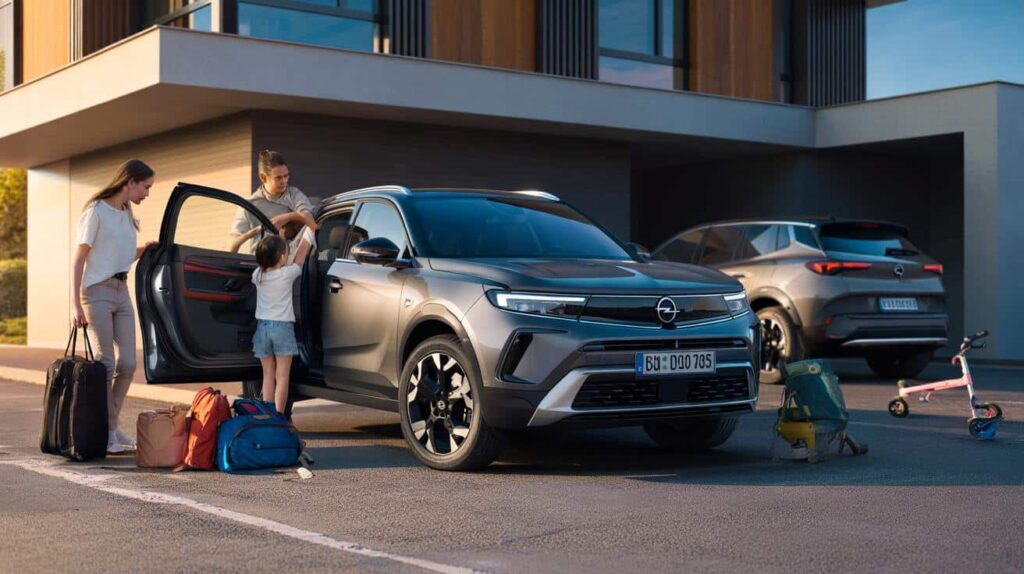
A comeback SUV aimed squarely at tight family budgets
Opel has pulled the old Frontera name out of storage for a very modern mission. The new model is a compact family SUV, designed for households that need space and flexibility but have limited tolerance for £40,000-plus price tags.
At 4.38 metres long, the Frontera is shorter than many traditional family saloons yet offers a tall roofline, big windows and a boxy profile. That squared-off design is not just a styling trend: it helps create headroom, upright seating and a usable third row in the seven-seat version.

The car targets the same broad segment as the Dacia Duster, Nissan Qashqai and the latest Citroën C3 Aircross. Its angle is clear: keep things rational, keep the kit list focused on what families really use, and keep the purchase price within reach for middle-income buyers.
The entry electric version is advertised from €22,900 in France, making it one of the cheapest electrified SUVs currently on sale.
Crucially, buyers can choose between a mild-hybrid petrol powertrain or a fully electric set-up, without being pushed into one technology. That freedom of choice is rare at the lower end of the price scale.
Hybrid or electric: two ways to cut fuel costs
The 48V hybrid for drivers not ready to plug in
For many families, the idea of going fully electric still raises questions about charging access, range and long trips. Opel’s answer is a 48V mild-hybrid system built around a 1.2-litre turbocharged petrol engine.
Available with 110 hp or 136 hp, both versions use a dual-clutch automatic gearbox and a compact electric motor fed by a 48V battery. The electric assistance helps the engine at low revs, trims fuel use in stop-start traffic and smooths pull-away from junctions.
- 1.2 Turbo Hybrid 110 hp – automatic, front-wheel drive
- 1.2 Turbo Hybrid 136 hp – automatic, front-wheel drive
While the system cannot power the car for long distances on electricity alone, it does allow short electric creeping in jams and can switch the engine off earlier when coasting. For city commuters who do 20–50 km a day, the promise is simple: lower fuel bills without changing driving habits.
The full-electric Frontera for drivers ready to unplug from petrol
Alongside the hybrid sits a 100% electric Frontera with a 113 hp motor. Opel offers two battery sizes, targeting different use cases and wallets:
- 44 kWh usable capacity – up to 305 km WLTP range
- 54 kWh usable capacity – up to 409 km WLTP range
Both versions come with 11 kW AC charging as standard, suited to home wallboxes or public destination chargers. On long journeys, the car accepts up to 100 kW DC rapid charging, allowing a 20–80% top-up in under half an hour in ideal conditions.
For a compact family SUV, an advertised 409 km WLTP range puts the larger-battery Frontera into realistic “long-weekend” territory without constant range anxiety.
For many European families who can charge at home or at work, the smaller 44 kWh pack may be enough, especially if daily driving rarely exceeds 150 km. The lower price of this version is what drags the electric Frontera below that psychological €23,000 threshold once incentives are applied.
A modular interior that actually uses the boxy shape
The cabin sticks to a simple formula: two digital screens, a clean dashboard and physical buttons for key climate controls. That last detail matters for stressed parents trying to adjust the temperature with a child yelling in the back.
A digital instrument cluster sits behind the steering wheel, with a central touchscreen handling media, navigation on higher trims, and smartphone mirroring via Apple CarPlay and Android Auto. Wireless features depend on specification, but Bluetooth and DAB radio are standard fare.
Where the Frontera earns its family credentials is in its seating and storage. Buyers can pick a basic five-seat layout or a seven-seat version with a folding third row. On some trims, the second row slides, allowing owners to juggle legroom for rear passengers versus luggage space.

- Second row: folding flat, available sliding bench on selected trims
- Third row (7-seat versions): fold-away seats for occasional use
- Maximum boot volume: up to around 1,600 litres with all rear seats folded
Materials lean toward hardwearing rather than luxurious, though the finish aims to sit above bare-bones budget rivals. Practical touches such as deep central storage, multiple cupholders and optional parking aids show where Opel expects the car to spend its life: outside schools, supermarkets and sports centres.
Price positioning: punching under the compact SUV norm
Where the Frontera becomes particularly disruptive is in its pricing, at least in its launch market. For November 2025 in France, Opel communicates the following starting points:
| Version | Powertrain | Indicative starting price |
|---|---|---|
| Frontera Hybrid Édition | 1.2 Turbo 110 hp, automatic | €23,400 (incl. taxes) |
| Frontera Electric 44 kWh | 113 hp, 44 kWh battery | From €22,900 after EV bonus |
Those figures reflect a mix of manufacturer discounts and conditional trade-in bonuses, valid up to the end of November 2025. Without incentives, the electric model’s list price sits closer to €30,900, underlining how dependent the EV proposition remains on government support.
Putting a seven-seat capable SUV with hybrid or electric power below €25,000 sends a clear message to families who felt priced out of electrification.
In markets like the UK or US, exact prices and incentives will differ, but the strategy is likely to stay the same: offer a relatively affordable step into electrified family transport, rather than a high-margin tech showcase.
How this kind of SUV could fit different households
To understand who might actually benefit from a car like the Frontera, it helps to run through a few real-world scenarios.
Urban family with street parking
A family living in a dense city, relying on street parking and doing short daily trips, might lean toward the 1.2 Turbo hybrid. They avoid the stress of hunting for charging points yet still gain lower fuel use and automatic transmission comfort. The compact length eases parallel parking while the high roof makes child seat installation less of a back-straining exercise.
Suburban commuters with home charging
In the suburbs, a household with a driveway and a 7 kW home wallbox could be a strong candidate for the 44 kWh electric Frontera. Typical European commutes fall well within its 305 km WLTP rating, and overnight charging at cheaper electricity tariffs can undercut the running costs of diesel by a wide margin.
If regular long motorway trips are part of the picture, the 54 kWh pack brings extra comfort, especially in winter when heating eats into range. Planning charging stops along major routes would still be necessary, yet the 100 kW DC capability keeps breaks manageable.
Hybrid vs electric: risks, trade-offs and long-term bets
Choosing between a mild hybrid and a full EV is no longer a purely technical debate; it has become a financial and lifestyle calculation.
- Hybrid upsides: lower upfront cost, no reliance on public charging, familiar refuelling, fewer worries about cold-weather performance.
- Hybrid downsides: still exposed to fuel price volatility, emissions regulations might tighten, city centres could restrict combustion engines further.
- Electric upsides: cheaper running costs where electricity is affordable, quieter drive, access to low-emission zones, potential tax perks.
- Electric downsides: higher list price without incentives, dependence on charging infrastructure, noticeable range loss in winter at motorway speeds.
For many buyers, the safest path may be to keep cars slightly longer. A flexible seven-seat SUV with an efficient hybrid can remain serviceable even as rules on emissions zones change gradually. On the other hand, those ready to commit to home charging and who mainly drive locally could see the electric option pay off within a few years in fuel savings alone.
Terms like “WLTP range” are worth decoding too. WLTP is a European lab test cycle that often sits above the real distance most drivers will see, especially at highway speeds. A rule of thumb for cautious planning is to assume around 70–80% of WLTP range on mixed routes, and less in winter. For the 54 kWh Frontera, that might mean expecting 280–320 km between charges in typical use, which is still plenty for school runs, commuting and weekend visits.
As compact SUVs continue to push upmarket, a model that pairs honest practicality with sub-€23,000 electric pricing stands out. The Frontera shows how carmakers are starting to shift their electrification strategy from early adopters to families shopping on spreadsheets and monthly budgets.