The first thing you hear is the rattle of bamboo canes in the wind. In a small backyard on the edge of town, an old A-frame bean teepee has been quietly replaced by something unexpected: low, scattered mounds, half-covered with compost, dotted with tiny colored sticks. A woman in faded overalls leans down, pressing a bean seed into the soil sideways, not point-first. She pauses as if listening. Then she moves on to the next spot, never planting in a straight line, almost like she’s sketching with seeds.
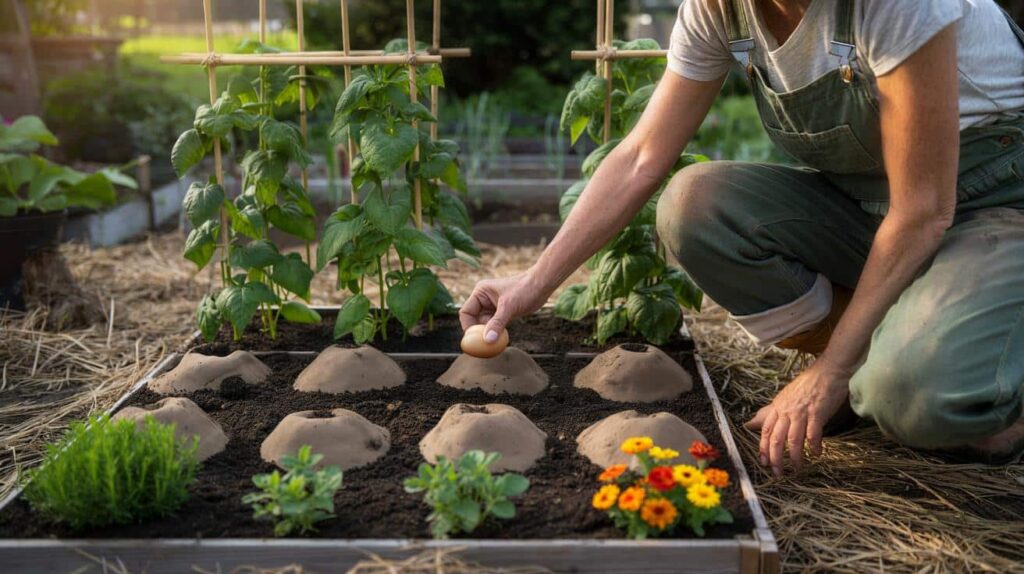
She laughs when asked what she’s doing. “Experimenting,” she says.
Something is changing in the way gardeners plant beans.

From straight rows to living “bean systems”
Walk through any community garden this spring and you’ll notice it. Those perfect military-style rows of beans your grandparents grew are quietly disappearing. Instead, you see circles, spirals, clusters, and odd little islands of green. The bean patch is turning into something more like a living network than a field.
Gardeners talk about roots, about airflow, about mycorrhizae like they’re gossiping about the neighbors. They’re not just dropping seeds into the ground. They’re designing a system for stronger growth.
Take the shared garden behind a small library in Wisconsin. Three years ago, volunteers planted beans in long, tidy lines along a fence. The plants looked fine from the sidewalk. Up close, though, the leaves were yellowing by mid-summer and yields were just “okay”.
Last year they tried something different. They built short bean “stations” every meter: a small composted mound, three pole beans, and a ring of dwarf marigolds. Same variety, same climate, but the plants were fuller, darker, and the harvest almost doubled by their rough counts. One volunteer admitted the real surprise: the plants kept producing into early fall, when they used to give up by late August.
What’s happening has less to do with a “magic trick” and more to do with how beans actually live. Beans are social plants with hungry roots that hate being waterlogged and overheated. When they’re jammed into tight rows, competing for the same thin strip of nutrition, they survive but rarely thrive.
Spread them into small clusters on raised pockets of rich soil, break the wind a bit, and keep the soil alive with other plants, and they behave differently. They root deeper, fix more nitrogen, and handle stress like heat waves and sudden storms with a kind of quiet resilience that you can literally feel when you touch their stems.
The new way gardeners are planting beans
The shift starts right at the moment the seed meets the soil. Many gardeners now begin by creating **micro-mounds** instead of long furrows. A mound is nothing fancy: a shallow dome of loosened earth, mixed with compost or old leaf mold, about the size of a dinner plate. On each one, they press three or four bean seeds in a loose triangle, 5–8 cm apart, about a knuckle deep.

No ruler, no perfect geometry. Just small pockets of luxury soil, spaced so air can move and roots can spread under the surface like invisible bridges.
We’ve all been there, that moment when you tug on a weak bean plant and realize the roots barely left the top five centimeters of soil. That’s the heartbreak these new methods are quietly trying to avoid. Gardeners are learning that beans want loose, deep, slightly warm soil and a reason to grow down, not crowd sideways against their neighbors.
The common mistake is planting too close, too shallow, in soil that’s been stepped on all winter. People blame the seed, or the weather, when the real problem is that the beans never had a chance to build a serious underground anchor. Let’s be honest: nobody really double-digs and fluffs every inch of a bed before sowing.
So the method adapts to real life. One urban gardener in Bristol told me she plants her beans in rough “triads” on mounds, then drops a layer of shredded cardboard and straw between them. She doesn’t weed much. She doesn’t water every day. Yet her beans climb confidently, with thick stems and dark leaves.
“When I stopped forcing beans into rows and started planting them into little homes, everything changed,” she says. “I think of each mound as a tiny bean village. They seem happier. And when the plants are happier, I relax too.”
- Micro-mounds instead of long furrows
- Three to four seeds per mound, loosely spaced
- Mulch between mounds to keep roots cool
- Light, deep soil instead of compacted strips
- More attention to airflow and spacing, less obsession with straight lines
Small tweaks, bigger harvests, calmer gardeners
Once you start looking at beans this way, the garden feels different. You stop thinking in meters of rows and start thinking in clusters of life. The beans don’t stand alone anymore. They live with low herbs under them, flowers nearby for beneficial insects, and soft mulch that keeps their feet comfortable.
*The goal quietly shifts from “a full row” to “a strong plant”.* Yields often follow. The plants you do have simply work harder, stay healthier, and keep producing longer into the season.
| Key point | Detail | Value for the reader |
|---|---|---|
| Cluster planting on mounds | 3–4 seeds per raised pocket of rich soil | Stronger roots, better resilience in heat and storms |
| Focus on soil life | Compost, mulch, and less compaction | Healthier plants with fewer disease problems |
| Airflow and spacing | Short “stations” instead of long rows | Less mildew, more productive foliage and pods |
FAQ:
- Question 1Can I still grow beans in straight rows and get good results?Yes, you can, but spacing and soil looseness matter more than the exact shape. Even in rows, creating small mounds and wider gaps between plants will usually boost strength.
- Question 2Do these methods work in containers or on balconies?They do. Use deep pots, create mini-mounds inside the container, and plant in loose clusters rather than a tight ring around the edge.
- Question 3How far apart should I space the bean mounds?For most bush beans, 30–40 cm between mounds is enough. For vigorous pole beans, give them 40–60 cm so they don’t shade each other too heavily.
- Question 4Do I need special bean varieties for stronger growth with this method?No. Classic varieties respond just as well. What changes is the planting approach: soil structure, spacing, and support, not the genetics.
- Question 5What should I plant with beans to help them grow better?Low companions like marigolds, basil, or lettuce work well. Avoid planting them right next to heavy feeders like corn unless you plan the spacing generously.