In today’s world, many people struggle to get restful sleep. Our days are filled with screen time, stress, and chaotic schedules that keep our minds racing long into the night. This constant stimulation makes it tough to wind down. However, yoga can offer a natural solution to this problem. No need for intense or complicated poses before bed. In fact, gentle movements and slow stretches are most effective for promoting sleep.
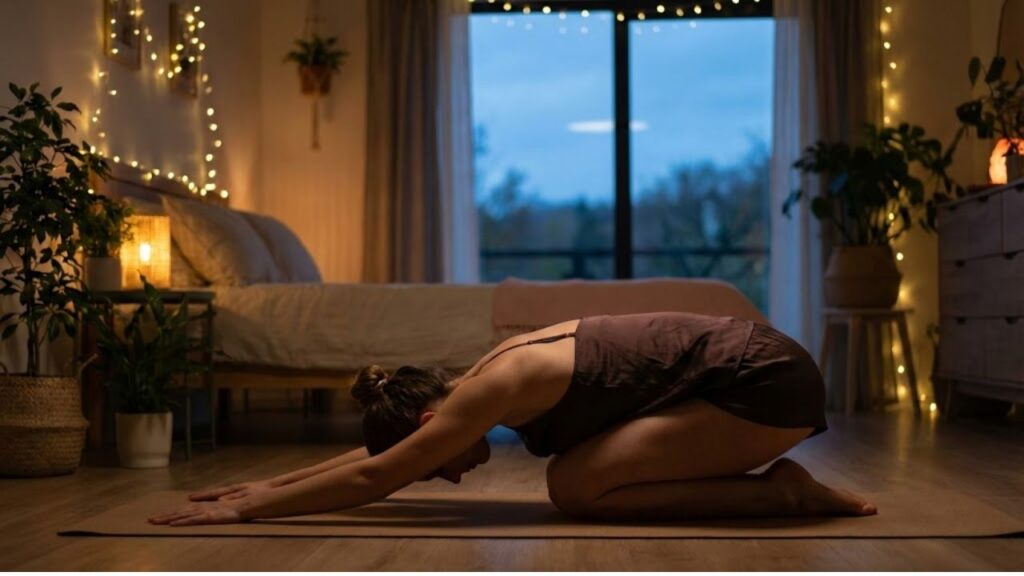
The goal is to calm your nervous system, release any physical tension, and signal to your brain that it’s time to rest. These three yoga poses help you relax your muscles, slow your breathing, and quiet the thoughts in your head, making it easier to drift off to sleep. Whether you’re new to yoga or experienced, these poses can be done right in your bedroom just before bed.
Why Yoga Promotes Better Sleep
Sleep difficulties often arise from a nervous system that is constantly on alert. When the body remains stressed, it’s nearly impossible to fall asleep. Gentle yoga serves as a bridge to transition from a stressed state into a more relaxed one. The slow stretches target areas where tension accumulates, such as the hips, lower back, and spine. Breathing exercises help slow your heart rate and prepare your mind for rest. Consistent practice of calming yoga can improve sleep quality, reduce waking up during the night, and leave you feeling more refreshed in the morning.

Legs Up the Wall Pose
The Legs Up the Wall pose is a restorative yoga posture that helps calm your body, especially before bedtime. It’s gentle, easy to do, and requires minimal effort.
How to do it:
- Sit next to a wall and slowly lie down on your back, raising your legs upward.
- Move your hips closer to the wall but maintain a comfortable position.
- Let your arms rest naturally at your sides, palms facing up.
- Close your eyes and allow yourself to relax.
Why it Helps Sleep:
This pose naturally lowers your heart rate and encourages deep breathing. It relieves physical fatigue, providing a sense of support and safety throughout your body.
How long to stay:
Hold the pose for 2 to 5 minutes while breathing slowly through your nose.
Helpful tip:
If you feel tension in your lower back, try moving your hips slightly farther from the wall or bending your knees to alleviate discomfort.
Seated Forward Bend Pose
The Seated Forward Bend is a calming stretch that releases tightness in your back and brings your focus inward.
How to do it:
- Sit on the floor with your legs stretched out in front of you.
- Inhale, lengthening your spine, then exhale and slowly bend forward from your hips.
- Keep your knees slightly bent if needed, and let your head and neck hang loosely.
Why it Helps Sleep:
This forward fold naturally calms the mind and releases tension in your lower back and legs, making it easier to relax before bed.
How long to stay:
Hold the position for 1 to 2 minutes, breathing deeply and slowly.
Helpful tip:
If you need more comfort, place a pillow on your legs or fold a blanket under your hips.
Corpse Pose
The Corpse Pose is commonly used at the end of yoga sessions and is ideal for achieving total relaxation and a quiet mind.

How to do it:
- Lie on your back with your body flat on the floor or mattress.
- Allow your feet to naturally fall apart and place your arms at your sides.
- Close your eyes and let your entire body relax into the surface beneath you.
Why it Helps Sleep:
This pose promotes full-body relaxation and clears the mind of racing thoughts, making it easier to fall asleep.
How long to stay:
Stay in this position for 3 to 7 minutes, or as long as it takes until you feel completely relaxed.
Helpful tip:
Focus on your breathing, counting each exhale from one to ten to deepen your relaxation.
Creating a Bedtime Yoga Routine
For optimal results, practice these poses in a quiet, dimly lit room. Avoid screens and bright lights before starting. Here’s a simple bedtime sequence:
- Start with Seated Forward Bend.
- Move into Legs Up the Wall.
- Finish with Corpse Pose.
The full routine will take around 7 to 10 minutes. Focus on your breathing and enjoy the calming effect of each pose rather than worrying about how deep you can stretch.
Enhancing Sleep with Breathing Techniques
Pairing yoga with mindful breathing makes the practice even more effective. A simple technique is to inhale for a count of four and exhale for a count of six. By exhaling longer than you inhale, you signal to your brain that it’s time to relax. Keep your breathing smooth and effortless throughout your yoga practice.
Additional Tips for Better Sleep
Yoga works best when combined with healthy bedtime habits. Here are some tips to support your sleep:
- Finish eating at least two hours before bedtime.
- Avoid caffeine in the evening.
- Keep your bedroom cool and dark for optimal rest.
- Set a consistent bedtime each night.
Just one simple yoga pose every night can significantly improve your sleep quality over time.
Who Should Be Cautious
If you have spinal injuries, high blood pressure, or circulation issues, avoid holding inverted poses for long periods. Pregnant women should modify forward bends and consult a professional if unsure.
Improving your sleep doesn’t require complex routines or medication. A few minutes of gentle yoga before bed can help your body naturally relax. These three simple poses can be easily incorporated into your nightly routine. If you’d like, I can also create a personalized 10- or 15-minute sleep yoga sequence to fit your schedule.